


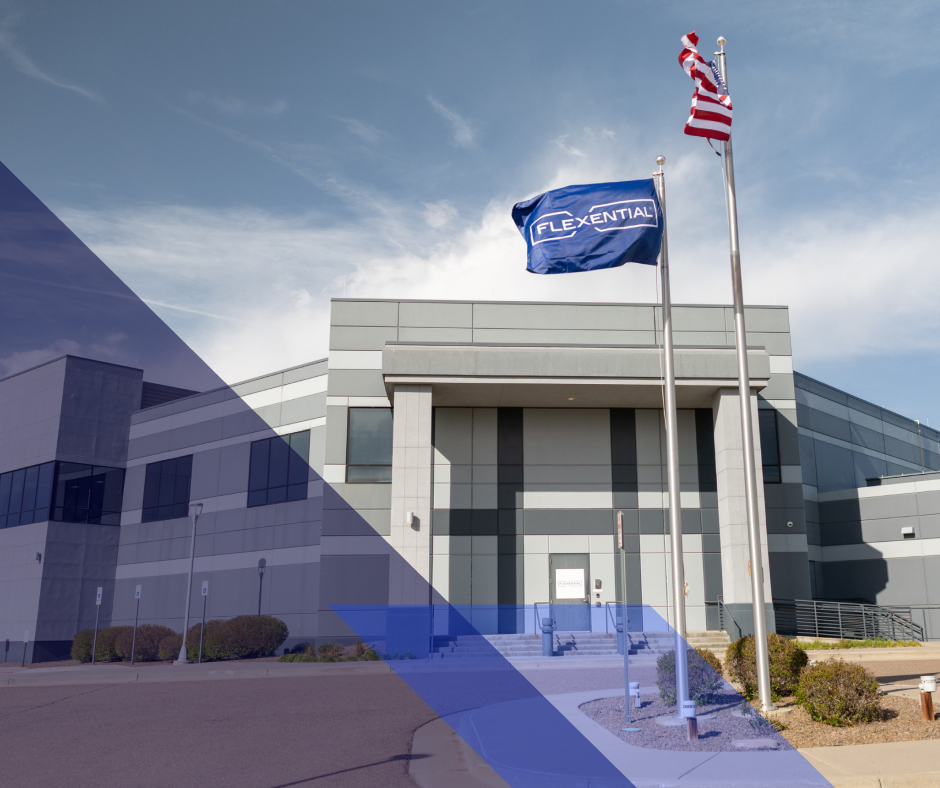

Selecting optimal data center location requires balancing market dynamics, power availability, risk assessment, and total cost of ownership for long-term scalability.
- Power availability has become the decisive factor in data center site selection, with 84% of decision-makers ranking it among their top three considerations, surpassing fiber connectivity for the first time
- A comprehensive colocation sourcing strategy connects site analysis with vendor evaluation, risk assessment, and compliance requirements to prevent costly procurement missteps
- Enterprise downtime costs average $540,000 per hour for Global 2000 companies, making SLA evaluation and disaster resilience critical location criteria
- Climate risk assessment is now critical to site selection, with 27% of the world's top 100 data center hubs projected to face high or very high physical climate risk by 2050
- Total cost of ownership modeling must account for multi-year power costs, connectivity fees, and operational overhead to avoid hidden expenses that erode projected savings
For enterprise leaders, the traditional approach to data center procurement no longer delivers competitive advantages. What was once a straightforward real estate decision has become a strategic initiative that directly impacts operational resilience, financial performance, and growth capacity.
This framework provides a structured approach to data center location strategy, equipping IT procurement directors and site selection leaders with the analytical tools and decision models needed to evaluate options across all relevant dimensions. Rather than treating site selection and vendor evaluation as separate exercises, the methodology presented here integrates market analysis, power availability assessment, financial modeling, and risk management into a unified sourcing strategy.
The strategic pillars of data center site selection
Establishing criteria for best locations for data centers demands a systematic evaluation across multiple dimensions.
Regional connectivity, climate risk exposure, tax incentives, power infrastructure, and regulatory environment each play distinct roles in determining long-term site viability. The challenge for enterprise leaders lies in weighting these factors appropriately based on organizational priorities and workload requirements.
The most effective data center site selection processes begin with a clear articulation of business requirements rather than geographic preferences. Starting with "where do we want to be" rather than "what do we need" often locks teams into suboptimal locations that constrain future flexibility.
Analyzing market dynamics for data center site selection
Data center site selection in 2026 requires a fundamentally different approach than even two years ago. The market has shifted from a supply-driven environment where developers could build nearly anywhere to a demand-constrained reality where viable sites are determined primarily by infrastructure availability.
Conducting thorough market analysis to identify high-growth, low-risk regions drives successful procurement outcomes. Primary markets like Northern Virginia, Atlanta, and Phoenix continue to see strong demand, but vacancy rates have dropped to historic lows. CBRE reports that primary market vacancy fell to just 1.6% in the first half of 2025, down from 2.8% the previous year. This scarcity is driving enterprises toward secondary and emerging markets that can deliver power on reasonable timelines.
Evaluating geographic trade-offs early in the procurement lifecycle prevents costly course corrections later. Markets with abundant power availability may lack strong fiber connectivity. Regions with favorable tax incentives may carry elevated climate risk. Understanding these relationships upfront enables more informed decision-making.
The rise of AI workloads has further intensified market dynamics. Hyperscale and AI-driven demand is absorbing available capacity faster than new supply can be delivered, with 74.3% of all under-construction capacity already preleased. For enterprise buyers, this means longer lead times and more competitive positioning for available inventory.
"The era of easy expansion has ended. What replaced it is a more disciplined, more infrastructure-driven reality where success depends on early alignment among utilities, governments, communities, and capital."
—Area Development, "Data Centers in 2025: When Power Became the Gatekeeper"
For a deeper look at how AI-driven demand is reshaping infrastructure requirements, explore Beyond the AI Boom: An Infrastructure Reality Check.
Power density and sustainability requirements
Rising AI workloads have fundamentally shifted location requirements toward high-density power availability. According to the AFCOM 2025 State of the Data Center Report, average rack density has more than doubled from 7 kW per rack in 2021 to 16 kW per rack today, with 79% of data center operators expecting further increases due to AI and high-performance workloads. This trajectory directly affects which markets can support enterprise deployments and which cannot.
{{statOne}}
Power now tops every other consideration in data center location strategy. Just one year ago, proximity to fiber optic infrastructure led the list of site selection factors. Today, access to megawatts has pulled decisively ahead, with utility providers reporting significantly longer timelines to deliver power in key U.S. markets, typically one to two years beyond what hyperscalers and colocation developers expect. Data center power density requirements will only accelerate this trend as AI workloads demand more watts per rack.
This disconnect between planning assumptions and on-the-ground realities has important implications for procurement timelines. Factoring realistic power delivery schedules into sourcing models avoids the project delays and cost overruns that plague less disciplined approaches.
Sustainability considerations also shape the decision. While Bloom Energy stated that 95% of data center developers affirm that sustainability and carbon reduction targets remain in place, the path to achieving those goals continues to evolve. Markets with access to renewable energy sources, whether through direct grid supply or on-site generation options, offer advantages for organizations with aggressive decarbonization commitments.
Real-world deployments show how enterprises have tackled these power and sustainability challenges. See how one organization executed an innovative colocation strategy that balanced power requirements with sustainability goals.
Developing a holistic colocation sourcing strategy
The sourcing strategy model must connect site analysis with vendor evaluation, risk assessment, and compliance requirements. Treating these as sequential rather than integrated activities often forces teams to revisit earlier decisions when downstream requirements surface. A comprehensive approach evaluates all dimensions simultaneously, identifying trade-offs and synergies that inform better outcomes.
The shift from isolated procurement to comprehensive colocation strategy reflects the increasing strategic importance of digital infrastructure. Data center decisions made today will constrain or enable organizational capabilities for years to come. This reality demands a more rigorous, cross-functional approach to vendor selection and site evaluation.
The data center selection process: beyond real estate
The data center selection process has evolved from isolated site selection to end-to-end colocation sourcing strategy. Where procurement teams once focused primarily on square footage, power density, and lease terms, today's evaluation criteria span technical capabilities, operational excellence, financial stability, and strategic alignment.
A comprehensive strategy model includes axes for both technical and financial value. Technical evaluation encompasses power infrastructure, cooling capabilities, connectivity options, security posture, and compliance certifications. Financial assessment extends beyond base lease rates to include power costs, connectivity fees, professional services, and potential expansion economics.
The scarcity of available capacity has shifted negotiating dynamics. In constrained markets, colocation increasingly behaves less like a real estate product and more like a power access product. Space is not the hard part anymore; deliverable megawatts on a timeline that supports business requirements is.
IT procurement leaders operating in this environment need earlier engagement with potential providers, more rigorous qualification processes, and greater willingness to consider emerging markets where capacity may be more readily available. Maintaining relationships with multiple qualified providers across diverse geographies creates options when capacity tightens further.
Evaluating colocation service level agreements (SLAs)
Colocation service level agreements define the operational guarantees that protect mission-critical infrastructure. For enterprises running always-on applications, the necessity of a 100% availability SLA cannot be overstated. Even seemingly small differences in uptime commitments translate to meaningful operational risk.
Understanding what SLA percentages actually mean in practice matters. A 99.99% uptime guarantee, commonly referred to as "four nines," allows for approximately 52 minutes of downtime per year. A 99.999% commitment, or "five nines," reduces allowable downtime to just over five minutes annually. When every second of unavailability carries significant cost, these distinctions matter.
{{statBigOne}}
Beyond uptime percentages, comprehensive SLA evaluation should address response times for support requests, resolution timeframes for incidents, network latency commitments, and data backup and recovery provisions. The remediation framework, including service credits and financial compensation for SLA breaches, provides insight into the provider's confidence in their operational capabilities.
Security provisions within the SLA deserve particular attention. Physical security measures, cybersecurity protocols, and compliance certifications should align with organizational requirements and regulatory obligations. For regulated industries, the ability to demonstrate provider compliance with specific standards may be a threshold requirement.
For guidance on evaluating security provisions, review these data center colocation security best practices.
Financial and risk modeling for enterprise infrastructure
Factoring in scalability and market dynamics can prevent the hidden costs that erode projected procurement savings.
Data center total cost of ownership extends far beyond the lease rate quoted in initial proposals. A narrow focus on per-kilowatt pricing often leads to unexpected expenses that significantly impact the financial case presented to internal stakeholders.
A rigorous financial model captures all cost elements across the planned deployment lifecycle. This includes not only direct costs like power and space but also connectivity fees, cross-connect charges, remote hands services, and the operational overhead associated with managing distributed infrastructure.
Analyzing data center total cost of ownership (TCO)
Data center total cost of ownership analysis requires a multi-year financial model accounting for connectivity fees, power costs, and operational overhead. The complexity of TCO calculation explains why many organizations underestimate true deployment costs. According to Fortune, average server utilization rates hover between just 12% and 18% of capacity, with servers sitting idle 70% to 85% of the time, representing significant opportunity for optimization.
Power costs typically represent the largest variable component of data center TCO. According to JLL, commercial electricity rates have risen nearly 30% since 2020, reaching an average of 9.7 cents/kWh in H1 2025, driving development toward markets with lower power costs such as Salt Lake City (5.7 cents/kWh) and Denver (6.4 cents/kWh). Accurate power cost forecasting is critical to reliable financial projections.
{{statBigTwo}}
Comparative analysis of TCO elements across providers and locations supports internal C-suite buy-in for recommended approaches. When presenting data center investment decisions, procurement leaders should articulate the complete cost picture, including scenarios that account for potential growth, market changes, and operational variables.
Hidden costs that frequently surprise organizations include: metered power premiums during peak usage periods, charges for exceeding contracted power thresholds, network transit fees beyond initial allocations, and costs associated with compliance audits and certifications. Experienced providers can help identify and quantify these potential expenses during the evaluation process.
Data center risk management and compliance
Evaluating locations based on disaster resilience and compliance-ready infrastructure is now a baseline requirement for enterprise deployments. Climate change is no longer an abstract future concern but a present reality affecting site selection decisions today. According to the 2025 Global Data Centre Physical Climate Risk and Adaptation Report, 27% of the world's top 100 data center hubs will face high or very high physical climate risk by 2050 under current emissions scenarios.
"Data centers are the silent engine of the global economy. But as extreme weather events become more frequent and severe, the physical structures underpinning our digital world are increasingly vulnerable."
—Dr. Karl Mallon, Founder, XDI
Climate hazards affecting data centers include flooding, tropical cyclones, forest fires, coastal inundation, and extreme heat events. Facilities in coastal areas and regions prone to extreme weather require additional resilience investments to maintain acceptable risk profiles. For some deployments, avoiding high-risk regions entirely may be the most cost-effective approach.
Compliance requirements add another dimension to location evaluation. Regulated industries require facilities that meet relevant certification requirements, whether SOC 2, HIPAA, PCI-DSS, or industry-specific standards. Provider certifications can significantly reduce audit burden and associated costs.
Insurance considerations are increasingly influencing site selection. Insurers have begun differentiating pricing based on climate risk exposure, and some have declined coverage for facilities in particularly vulnerable locations. Insurance availability and cost deserve a place in the location analysis.
To learn more about building organizational resilience against natural disasters and climate events, watch Mastering Disaster Preparedness: Lessons from the Frontlines of Risk and Resilience.
Executing the data center location strategy
Moving from data center procurement to a fully operational site requires disciplined execution across multiple workstreams.
The strategic framework outlined above provides the analytical foundation for sound decision-making. Translating that analysis into successful deployment demands attention to timeline management, stakeholder coordination, and change management.
Leaders who adopt end-to-end sourcing can better manage power, cost, and market complexities that challenge less systematic approaches. The integration of site selection, vendor evaluation, financial modeling, and risk assessment into a unified data center location strategy yields benefits throughout the procurement lifecycle.
Key execution considerations include:
Timeline realism. Power delivery timelines in constrained markets may extend 18 to 36 months beyond initial estimates. Building this reality into project schedules prevents downstream disruptions.
Stakeholder alignment. Data center decisions affect multiple organizational functions, including IT operations, finance, security, compliance, and business units. Early engagement with all stakeholders prevents late-stage objections that derail procurement timelines.
Provider partnership. The most successful deployments result from collaborative relationships between enterprise buyers and colocation providers. Providers with deep market knowledge can identify opportunities and risks that internal teams may overlook.
Flexibility preservation. Market conditions continue to evolve rapidly. Contracts that preserve optionality for future growth, technology changes, and geographic expansion protect long-term organizational interests.
The data center market will remain dynamic through the remainder of this decade. AI workloads will continue to drive demand, power constraints will persist in major markets, and climate risks will intensify in vulnerable regions. A solid, repeatable approach to data center location strategy separates the enterprises that handle this complexity successfully from those stuck reacting to it.
Conclusion
Ready to develop your data center location strategy? Flexential site selection experts can help you evaluate options, model costs, and identify the optimal deployment approach for your specific requirements.