


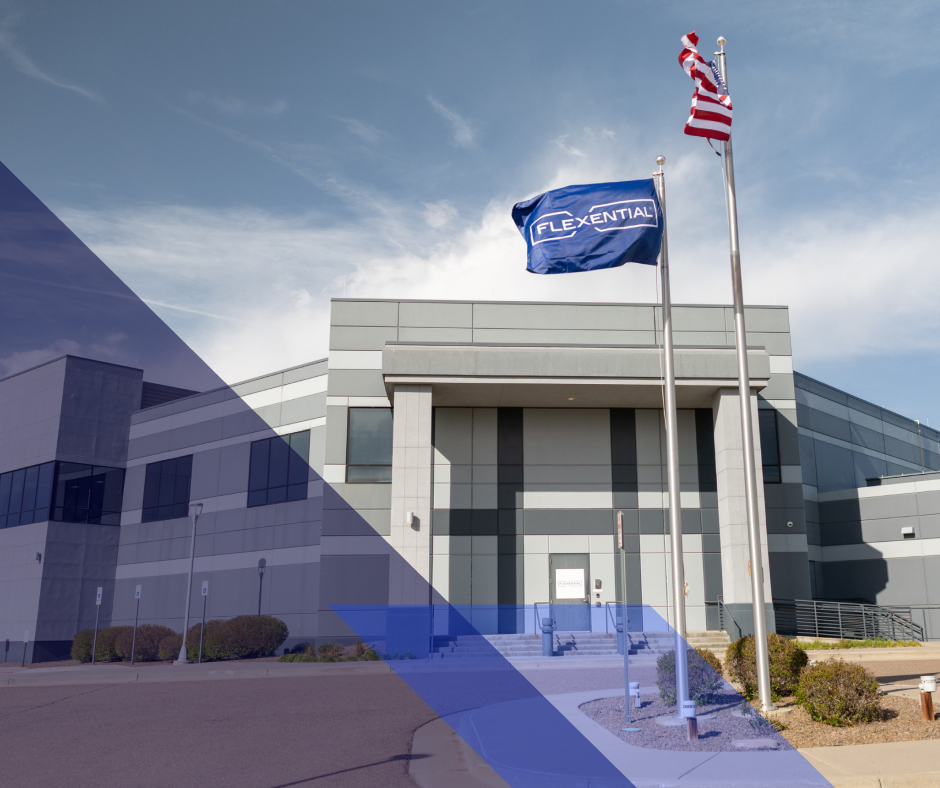
Understanding data center location and security
Data center colocation gives you a secure, professionally managed place for your hardware without the cost and upkeep of running your own facility. Many organizations choose colocation for greater resilience, steady performance, and proven physical and logical protections. To get the full value of those advantages, location and security need to work together.

Where your colocation environment lives affects latency, network access, regional risk, and compliance requirements. Security defines how well your infrastructure is protected from intrusions, unauthorized access, and operational issues. When you weigh both factors side by side, you can select a colocation data center that supports mission-critical workloads with confidence.
This guide outlines what to look for in a colocation facility, how location influences performance and risk, and how our approach at Flexential helps strengthen your hybrid IT foundation. If you are exploring what a colocation data center offers or comparing provider options, use this as a practical starting point.
Why data center location matters
Location influences nearly every technical and operational outcome in colocation. It shapes how quickly data travels between users and applications, how well your environment withstands regional disruptions, and how effectively you can meet regulatory expectations.
How location impacts latency and performance
Performance improves when infrastructure sits closer to the people and systems that rely on it. Placing workloads in a colocation facility near your user base or close to major carrier hubs can reduce latency and deliver a more consistent experience.
We operate more than 40 data centers across key U.S. markets. Each facility connects to our national 100 Gbps backbone and more than 300 on-net carriers, giving you the flexibility to position infrastructure where it performs best instead of concentrating everything in a single region. This reach helps organizations support distributed users, branch offices, and multi-site architectures with predictable network performance.
When evaluating potential colocation locations, consider:
- Where your primary users or branches are located
- Whether you need direct connectivity to specific cloud regions or SaaS platforms
- How much latency variation your applications can tolerate
- Whether your architecture requires low-latency links between sites
Choosing a location that aligns with your performance goals keeps your environment responsive without unnecessary complexity.
What role geography plays in disaster recovery
Geography directly affects your ability to maintain operations during regional events. A well-chosen colocation site lowers the risk that weather, utility failures, or other disruptions will interfere with critical services. It also supports stronger disaster recovery and business continuity plans.
Our data centers are placed across diverse U.S. regions so you can select primary and secondary locations that reduce shared risk. Interconnected facilities allow high-performance data replication and consistent continuity across markets through our data center interconnect services.
As you plan disaster recovery, review:
- Whether your primary and secondary sites are geographically independent
- Exposure to natural hazards in each region
- Stability of local utility infrastructure
- Ease of access for your team during incidents
- Availability of redundant paths inside and between facilities
Stronger disaster recovery outcomes start with choosing locations that support your recovery time and recovery point objectives.
Why location is critical for compliance
Location affects data residency, privacy requirements, and the regulations that govern sensitive workloads. Healthcare organizations address HIPAA. Payment environments must meet PCI DSS. Global operations weigh GDPR and other regional privacy laws when deciding where to process and store data.
Certifications and independent assessments provide assurance that facility controls meet recognized standards. Flexential undergoes annual audits and maintains attestations across ISO 27001, SOC 1, SOC 2, HIPAA, HITRUST, PCI DSS, and related frameworks. These help you demonstrate compliance during audits and internal reviews.
In addition to certifications, location itself can influence regulatory exposure. Privacy regulations may limit where data can reside or how it can move between regions. For context on these location-based privacy considerations, the Open Access Government review of data center privacy regulations provides a useful summary of how regional rules and physical geography intersect with compliance requirements.
To align location with compliance needs:
- Map applications to the data they process
- Review relevant regulatory requirements
- Confirm which certifications apply to each candidate facility
- Ensure cross-region data movement aligns with privacy rules
Choosing a location that supports your audit requirements simplifies documentation and strengthens long-term risk management.
Key security measures in modern colocation data centers
Security in a colocation environment depends on two layers. The provider is responsible for the physical protections of the facility, and you manage the logical controls applied to your systems. Strong, secure colocation brings these together so your security program extends cleanly into the data center.
Physical security: access control, surveillance, and staffing
Effective physical security protects infrastructure from unauthorized entry and on-site threats. Flexential facilities use 24-hour onsite security and technical staff, dual-factor or biometric authentication, multi-zone access control, and continuous camera monitoring. Visitor management is formalized, and several locations offer additional cage-level protections for sensitive workloads.
During a site tour or RFP process, confirm that the provider can demonstrate:
- Continuous onsite staffing by trained personnel
- Multi-factor or biometric access controls
- Clear separation between public, semi-secure, and secure zones
- Comprehensive CCTV coverage with defined retention policies
- Documented visitor procedures and escorted access when appropriate
Physical protections should align with your internal standards and give you the documentation required for audits and risk assessments.
Logical security: segmentation and encryption
Logical security focuses on protecting your systems from unauthorized access and network-based threats. In a colocation model, you maintain control of your infrastructure while using the provider’s backbone and interconnection services to build secure designs.
Our network backbone supports segmented and encrypted connectivity between data centers, carriers, and cloud environments. Customers build on this foundation with firewalls, VPNs, access controls, and monitoring tools that match their internal policies.
When planning logical security, consider:
- Segmenting internal, management, and public-facing networks
- Using encryption for traffic between facilities and cloud platforms
- Enforcing strict access controls for administrative functions
- Implementing monitoring and alerting consistent with your security guidelines
Logical controls are most effective when they fit naturally into your broader hybrid IT architecture.
Compliance-driven security: frameworks that validate controls
Compliance frameworks translate security practices into evidence auditors and partners can trust. They show that a provider’s processes, monitoring, and controls follow recognized standards.
Flexential undergoes independent assessments each year and maintains certifications and attestations across ISO 27001, SOC 1, SOC 2, SOC 3, HIPAA, HITRUST, PCI DSS, and related frameworks. These validations help support your own compliance requirements and simplify documentation during audits.
As you compare providers, take time to understand:
- Which certifications apply to each facility
- How often assessments occur
- How reports are made available
- How shared responsibility is defined
Compliance programs work best when they are mapped to the actual environments where workloads reside, making it easier to show that controls are implemented and tested as expected.
How to choose the right data center location for your business
There is no single location that works for every organization, as each environment has its own mix of performance needs, compliance requirements, and risk tolerance. A structured evaluation helps you defend your decisions, plan ahead, and choose sites that will serve you well as workloads change.
Factors to consider: risk zones, connectivity, and energy
A balanced assessment usually covers three core areas.
Risk profile
Begin by understanding the risk characteristics of each region. Look at:
- Exposure to hurricanes, floods, earthquakes, or wildfires
- Local utility stability and availability of backup generation
- Proximity to industrial zones or transportation corridors
This helps you decide whether workloads should stay in one region or be distributed across multiple markets for stronger resilience.
Connectivity and performance
Connectivity plays a central role in how your applications perform. Evaluate:
- Access to national and regional carriers
- Proximity to internet exchanges and carrier hotels
- Availability of data center interconnect services
- Access to cloud on-ramps
The Flexential footprint supports these priorities across more than 40 data centers and hundreds of carriers. This gives you flexibility to place workloads where they deliver consistent performance for your users and systems.
Power density and room to grow
High-density workloads such as AI, analytics, and graphics processing require more power and advanced cooling. Flexential provides high-density colocation options designed for power-dense IT environments, outlined in our resource on scaling high-density colocation.
When reviewing a location, consider:
- Power available per rack and per cabinet
- Cooling strategies and potential upgrades
- Planned expansions or capacity increases at the facility
Selecting a site that supports high-density workloads protects your investment and reduces the chance of disruptive migrations later.
Regional compliance requirements and regulations
Regulations often determine which facilities are eligible for specific workloads. Healthcare, financial services, and public sector organizations operate within strict requirements for data handling, residency, and retention.
During evaluation, review:
- Applicable regulations such as HIPAA, PCI DSS, GDPR, and regional privacy laws
- Certifications held by each facility
- Data residency and retention policies
- Requirements for storing logs, backups, or replicated data
To support evaluation and planning, two internal Flexential resources provide practical guidance:
Incorporating compliance considerations into your location decisions keeps IT, legal, governance, and executive teams aligned from the start.
The Flexential approach to location and security
Flexential operates more than 40 data centers across the United States, giving you a wide range of options to place infrastructure where it performs best. Each facility connects to our national 100 Gbps backbone and more than 300 on-net carriers, supporting low-latency performance, diverse routing choices, and efficient access to cloud and network partners.
Our data center ecosystem is built to deliver consistency and trust across every location. This includes:
- Purpose-built facilities designed for availability, efficiency, and long-term sustainability
- Multi-layer physical security with onsite personnel, dual-factor access controls, and continuous CCTV monitoring
- Annual independent audits and certifications across ISO, SOC, HIPAA, HITRUST, PCI DSS, and related frameworks
See the full footprint and details for each Flexential data center.
Case study: Innovative colocation strategy for a growing municipality
A recent Flexential colocation case study shows how location and security support reliable public services. A fast-growing municipality was relying on aging on-premises infrastructure that struggled to keep up with demand. Critical services such as emergency response, utilities, and community communication platforms depended on systems that no longer had the stability or capacity the city needed.
By partnering with Flexential, the city moved its core systems into one of our secure colocation facilities. The transition provided fully redundant power, efficient cooling, flexible network capacity, and a stable foundation for ongoing modernization. Our team accelerated implementation to meet the city’s schedule and stayed closely engaged throughout the migration.
As detailed in the full case study, the outcomes included:
- Improved reliability for essential public safety and community services
- Reduced operational risk tied to aging infrastructure
- A more scalable environment to support future growth and technology plans
Support for your next phase
A well-planned colocation strategy brings stability and clarity to your hybrid IT environment. If you are preparing for a transition or evaluating new sites, we can help you assess your options and choose a path that fits your goals.
Explore our data center colocation solutions
Key takeaways and FAQs about data center colocation
Choosing a colocation provider means evaluating location, security, and operational support together. These decisions influence performance, compliance, resilience, and cost for years, so a clear framework helps your teams align early.
Key points to remember:
- Location shapes latency, connectivity, and disaster recovery options.
- Physical and logical security controls should reinforce one another.
- Certifications provide independent validation of a provider’s controls.
- High-density support and energy efficiency matter for modern workloads.
- Reviewing data center best practices and building an effective colocation strategy supports decision-making across technical and business teams.
Below are brief answers to common questions we hear during colocation evaluations.
What is a colocation data center?
A colocation data center provides space, power, cooling, and physical security for your hardware. You maintain control of your systems while relying on the provider’s facility infrastructure. It offers a practical middle ground between owning a data center and relying entirely on cloud services.
Why does location matter so much?
Location affects user experience, latency, disaster recovery planning, and regulatory compliance. A well-chosen site supports performance expectations and risk management goals while meeting industry-specific data handling requirements.
How do modern colocation facilities protect physical infrastructure?
Modern facilities use continuous staffing, multi-factor access controls, biometrics, multi-zone security layers, and comprehensive camera monitoring. Flexential facilities use these protections to safeguard customer environments and support audit and compliance needs.
What logical security controls should customers apply?
Customers typically use firewalls, segmentation, encryption, and monitoring tools that match their internal security standards. Flexential backbone and interconnection services provide a secure foundation that supports these designs across environments.
How do certifications support compliance?
Certifications such as ISO 27001, SOC 1, SOC 2, HIPAA, HITRUST, and PCI DSS validate that facility controls meet recognized standards. They help auditors and regulators confirm that the environment supporting sensitive workloads is built and managed appropriately.
Do smaller organizations benefit from colocation?
Yes. Smaller organizations often gain resilience, security, and performance advantages that would be costly to achieve with their own facilities. Colocation allows them to focus on applications and operations instead of data center management.