

What is a colocation data center? What you need to know
A colocation data center is a facility where businesses rent space to house their own servers and IT equipment, while the provider supplies the building, power, cooling, physical security, and network connectivity. You own and control your hardware, and the colocation provider handles the infrastructure that keeps it running.
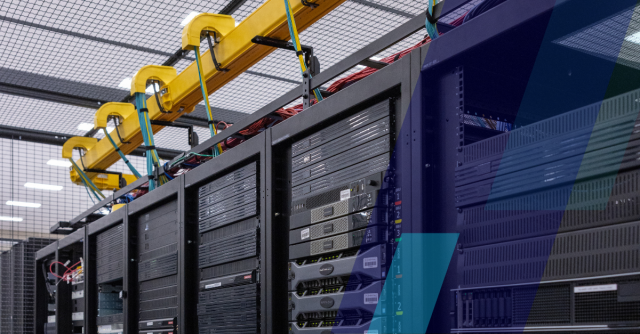
Colocation tenants benefit from shared infrastructure expenses and reduced maintenance responsibilities, making it a cost-effective and operationally efficient solution.
This model works well for organizations that want access to enterprise-grade facilities without the cost and complexity of building and operating their own data centers.
At a glance: Key takeaways
- Colocation data centers provide the facility, power, cooling, security, and connectivity while you retain ownership of your servers and equipment
- Colocation facilities typically include backup generators, uninterruptible power supplies (UPS), cooling systems, fire suppression systems, and physical security measures
- Types of colocation include retail (smaller deployments), wholesale (large-scale), and hybrid or managed options
- Colocation differs from cloud computing in that you own the hardware and have direct physical access to your equipment
- When evaluating providers, consider location, network connectivity options, compliance certifications, and room to scale
The global colocation market is rapidly expanding, predicted to grow to over $62 billion by 2022, up from $31.5 billion in 2017.
What is a colocation data center?
A colocation data center, sometimes called a “colo,” is a facility where multiple customers house their privately owned servers and computing hardware. The colocation provider owns and operates the building and all supporting infrastructure: electrical systems, cooling equipment, physical security controls, and network connectivity. Data center operators are responsible for managing the facility's power, cooling, and security systems to ensure optimal performance and uptime.
Think of it like renting physical space—ranging from racks to private suites—in a professionally managed building rather than buying and maintaining your own property. You bring your equipment, and the provider ensures the environment stays powered, cooled, secure, and connected. The reliability of the entire facility is ensured through comprehensive infrastructure management, including multiple system paths and backup power sources. If you’re new to colocation, the basic premise is simple: you get the benefits of a world-class facility without the burden of owning one.
How a colocation data center works
Understanding the division of responsibilities is essential when considering colocation. With colocation, organizations place their servers and IT equipment in a third-party data center facility, while the colo provider is responsible for the physical security, power, cooling, and network connectivity of the environment. This arrangement allows businesses to avoid the ongoing maintenance costs and burdens associated with managing in-house servers, such as power, cooling, and hardware management.
While customers retain control over their hardware and software, the colo provider ensures the facility meets strict standards for uptime, redundancy, and security. Choosing a reliable colo provider is essential for meeting uptime and recovery objectives.
The demand for colocation services continues to rise as organizations face challenges with legacy IT infrastructure and require scalable capacity growth.
Who owns the hardware and facility?
In a colocation setup, you own your servers, storage devices, networking gear, and any other equipment you deploy, while the colocation provider owns the building, power infrastructure, cooling systems, and physical security apparatus. This split creates a clear division of responsibility: you handle your hardware, operating systems, applications, and data, and the provider ensures the facility stays operational by delivering reliable utility power from multiple power grids, and maintaining redundant power feeds, multiple backup generators, battery backup systems, and environmental controls.
This arrangement differs from cloud computing, where the provider owns everything and you rent virtualized resources. With colocation, your equipment sits in a rack or cage that you control, and you can physically visit the facility to service or upgrade your hardware.
Power, cooling, and physical security explained
Colocation facilities deliver reliable power and precise environmental conditions around the clock. Most providers offer redundant power configurations so your equipment stays online even if one power source fails, with UPS systems bridging the gap during switchovers and diesel generators providing backup during extended outages. Backup power generators and battery backup systems are critical components that ensure continuous uptime and protect against power failures.
Cooling is equally critical. Servers generate significant heat, and colocation data centers use sophisticated cooling strategies for high-density colocation to maintain safe operating temperatures, from raised floor designs with precision air conditioning to liquid cooling for high-density deployments. Redundant cooling systems are implemented to ensure continuous operation and manage high heat loads, while generator backup supports cooling systems like CRAC and CRAH units during power outages.
Physical security typically includes perimeter fencing, 24/7 security personnel, video surveillance, biometric access controls, and mantrap entry systems, and colocation security protocols often extend to detailed access logging and multi-factor authentication for anyone entering the facility. Fire suppression systems are also a key safety feature, protecting the facility and equipment from fire hazards.
A quality data center provider will follow Uptime Institute data center tiering standards to ensure high levels of reliability and operational continuity.
Network connectivity and carrier access
One of the most valuable aspects of colocation is access to diverse network connectivity. Quality colocation data centers are carrier-neutral, meaning they host multiple telecommunications and internet service providers, giving you the freedom to choose preferred carriers, negotiate competitive pricing, and build redundant network paths.
Many facilities also offer direct connections to major cloud platforms, enabling hybrid architectures where some workloads run on colocated hardware while others run in public cloud environments.
Types of colocation data centers
Colocation services come in different configurations depending on how much space and power you need. Many colocation facilities are designed to support hybrid IT strategies and enterprise scalability, making them ideal for organizations with evolving infrastructure requirements.
Colocation facilities offer unmatched scalability, allowing businesses to grow seamlessly and quickly adapt to changing needs.
Retail colocation
Retail colocation is designed for organizations that need smaller deployments, typically ranging from a single cabinet to a few racks. In retail colocation, businesses lease individual racks or cabinets, paying for the specific space, power, and connectivity they use. This makes it a flexible option for small and mid-sized businesses or for enterprises testing colocation before committing to larger footprints.
Retail contracts tend to be shorter and more flexible than wholesale agreements, and you can often scale up incrementally as your needs grow.
In contrast, wholesale colocation is intended for enterprises requiring larger deployments, such as dedicated private suites or entire floors, offering enhanced physical security and customization options.
Wholesale colocation
Wholesale colocation serves organizations with large-scale requirements, usually starting at several hundred kilowatts of power capacity or dedicated data halls. Enterprises, hyperscale cloud providers, and large technology companies often use wholesale arrangements when they need a significant footprint and prefer to manage more of the interior environment themselves.
Wholesale contracts typically run longer and involve greater commitment, but they offer economies of scale that make them attractive for organizations with predictable, large-scale requirements. The choice between retail colocation vs wholesale colocation often comes down to how much control you want over your physical environment and how much space you actually need.
Hybrid and managed colocation options
Some organizations land between full self-management and fully managed services. Hybrid colocation lets you own your hardware while the provider handles certain tasks like monitoring or patching. It also enables integration of legacy systems with modern cloud platforms, creating a unified IT environment that supports both traditional and cloud-native workloads. Managed colocation goes further, with the provider taking responsibility for more day-to-day operations. Many providers offer smart hands service as an on-site support option for tasks such as equipment installation, software updates, and system-level changes, often managed through an online portal. These options work well for organizations that want physical control but lack the staff to manage everything in-house. Enterprises are increasingly adopting colocation as part of their digital transformation efforts due to the need for scalable and flexible IT infrastructure.
Benefits of using a colocation data center
Organizations choose colocation for several practical reasons, and the benefits of colocation extend across cost, flexibility, reliability, and security.
Cost efficiency compared to building a private data center
Building your own data center requires substantial capital investment in real estate, construction, electrical infrastructure, cooling systems, security measures, and ongoing maintenance, and for most organizations, these costs are difficult to justify. Colocation converts much of that capital expense into predictable operational costs because you pay only for the space and power you use while the provider spreads facility costs across multiple tenants, giving you access to professional-grade infrastructure at a fraction of what you would spend building it yourself.
Scaling and flexibility
Business needs change, and colocation accommodates that reality by letting you add racks, increase power allocation, or expand into additional space as your compute requirements grow. Many arrangements also allow you to scale back if requirements shrink, which means you can right-size your colocation footprint rather than building capacity for peak demand that sits idle most of the year.
Reliability, redundancy, and uptime
Colocation providers design their facilities for high availability, with redundant power systems, multiple utility feeds, backup generators, and N+1 or 2N cooling configurations that contribute to uptime levels most organizations cannot achieve on their own. Battery backup systems are also a crucial component, working alongside generators and power grids to ensure continuous uptime even during power disruptions.
When evaluating a colocation provider, it's important to consider their uptime history and certifications, such as Tier III or IV standards, which indicate a high level of reliability. Service level agreements (SLAs) outline the support and services provided, including specific metrics like availability and response time. Service level agreements typically guarantee 99.99% or higher availability, which matters for applications where downtime translates into lost revenue or compliance violations. This focus on colocation server hosting for high availability is one of the primary reasons organizations move out of in-house server rooms.
Enhanced security and compliance
Colocation facilities invest heavily in security because protecting customer equipment is fundamental to their business, and their physical security measures are typically far more comprehensive than what most organizations can justify implementing in-house. Many providers also maintain compliance certifications like SOC 2, HIPAA, and PCI DSS, which require specific controls around physical access and environmental protections, so housing your equipment in a certified facility can simplify your own compliance posture significantly.
Colocation data centers vs other data center models
Colocation vs on-premises data centers
With an on-premises data center, you own and operate everything: the building, the infrastructure, and the equipment. You have complete control but also complete responsibility for capital costs, maintenance, staffing, and obsolescence. To achieve the same level of reliability as a colocation facility, you must also invest in multiple backup generators to ensure continuous power during outages and avoid a single point of failure, which adds to the complexity and cost. This is why colocation appeals to organizations that want to shift the facility burden to a specialized provider while retaining ownership of their hardware.
For most organizations, this tradeoff makes sense unless there are specific regulatory or operational reasons to maintain a wholly owned facility.
Colocation vs cloud computing
Cloud computing and colocation address different needs, and many organizations use both. In a cloud model, you rent virtualized resources from a provider who owns all the hardware. You gain flexibility and speed of deployment, but give up physical control and may face unpredictable costs as usage scales.
Colocation gives you physical ownership of your hardware, predictable costs based on space and power, and the ability to optimize your environment for specific workloads. Many enterprises adopt hybrid strategies that blend both models, and understanding the tradeoffs between cloud vs colocation can help you decide which workloads belong where.
Colocation vs managed hosting
Managed hosting sits between colocation and cloud. The provider owns the hardware and handles much of the management, but you get dedicated resources rather than shared, virtualized infrastructure.
Colocation makes sense when you want to own your hardware, customize your environment, or avoid the ongoing fees associated with renting equipment. Managed hosting works better when you prefer someone else to handle hardware procurement, maintenance, and refresh cycles.
Who should use a colocation data center?
Ideal use cases by company size
Small and mid-sized businesses often turn to colocation when they outgrow closet server rooms or need to meet compliance requirements that their current facilities cannot support, and retail colocation offers them an affordable entry point with room to scale.
As these companies grow into the mid-market, colocation continues to make sense because it lets them add capacity quickly without major capital investments. Large enterprises, meanwhile, use colocation for disaster recovery sites, regional deployments that reduce latency, or hybrid architectures that combine owned hardware with cloud services.
To see how organizations of different sizes have approached these decisions, explore our customer stories, including how a fast-growing municipality used colocation to modernize infrastructure and improve reliability for essential public services.
Industries that commonly use colocation
Healthcare organizations often turn to colocation when they need to maintain direct control over patient data while meeting HIPAA requirements in a certified facility. Financial services firms have similar motivations, relying on colocation for low-latency trading infrastructure and the physical security controls that regulators expect. Government agencies frequently use colocation to modernize aging infrastructure without giving up physical control over sensitive systems, while technology companies depend on it for product infrastructure and customer-facing applications where consistent performance matters.
Our blueprints and design patterns library includes deployment approaches tailored to each of these industries.
Key considerations when choosing a colocation provider
Location and latency
Where your infrastructure sits matters because proximity to your users, employees, or cloud regions directly affects application performance. Geographic location is crucial, as placing data centers close to your headquarters or customer base reduces network latency and supports business continuity through geographic diversity. Locating your colocation footprint near your customers reduces latency and improves responsiveness.
Location also affects disaster risk, since facilities in different geographic regions provide resilience against hurricanes, earthquakes, or widespread power grid failures. Many organizations maintain primary and secondary colocation sites in distinct markets for this reason.
Compliance, certifications, and SLAs
If your organization operates in a regulated industry, your colocation provider's certifications matter. Look for SOC 2 Type II reports and verify certifications relevant to your industry: HIPAA for healthcare, PCI DSS for payment processing, FedRAMP for government work.
Review SLAs carefully, including uptime guarantees and what happens when the provider misses those targets.
Connectivity ecosystem and scalability options
Evaluate the provider's network ecosystem: how many carriers operate in the facility, whether direct connections to major cloud platforms are available, and whether you can establish cross-connects to reach partners or cloud on-ramps.
Consider your growth trajectory as well, because you want a provider who can accommodate expansion within the same facility and operate in multiple markets where you might eventually need presence.
Flexential operates 40+ data centers across 18 markets, with access to 300+ on-net carriers and direct cloud connectivity, supporting everything from single-cabinet retail colocation to high-density environments for AI and GPU workloads.
Is colocation right for you?
Colocation data centers offer a practical path to enterprise-grade infrastructure without the capital and operational burden of building your own facility. You gain reliable power, sophisticated cooling, strong physical security, and diverse network connectivity while retaining ownership of your hardware.
Whether you are evaluating colocation for the first time or comparing providers, the right facility can support your operations for years to come. Consider your requirements around location, compliance, connectivity, and scalability, and look for a provider whose capabilities align with your needs.
Learn more about Flexential colocation services
Frequently Asked Questions about colocation data centers
Is colocation cheaper than cloud?
It depends on your workload. Colocation typically offers more predictable costs and can be significantly cheaper for stable, long-running workloads. Cloud services often cost more over time for steady-state workloads but offer advantages for variable demand. Many organizations find a hybrid approach optimizes both cost and flexibility.
Is a colocation data center secure?
Quality colocation facilities maintain extensive physical security: 24/7 staffing, video surveillance, biometric access controls, mantrap entries, and detailed access logging. These protections typically exceed what most organizations implement in-house. Many providers also maintain certifications like SOC 2, HIPAA, and PCI DSS.
What is the difference between a data center and colocation?
A data center is a facility designed to house computing equipment with appropriate power, cooling, and security. Colocation is a service model within a data center where multiple customers rent space for their own equipment. The key distinction is ownership: in colocation, you own your hardware and rent space in someone else's facility.