



Building infrastructure that lasts requires action across three strategic pillars: governance, resilience, and high-density foundation.
- Governance gaps create risk. Without mature frameworks spanning IT, AI, and data governance, modernization efforts stall, and compliance exposure grows.
- Resilience is non-negotiable. 53% of organizations experienced latency impacts last year. Cyber resilience and redundancy planning have moved from IT concerns to boardroom priorities.
- AI demands new infrastructure. Standard colocation cannot support AI workloads. High-density capabilities for power, cooling, and connectivity are now table stakes.
- Talent shortages accelerate outsourcing. 61% of IT leaders report skills gaps in managing specialized infrastructure, driving demand for managed services partnerships.
- Planning horizons are extending. 79% of enterprises now map data center capacity more than a year in advance to secure the specialized resources AI requires.
Future-proofing IT infrastructure demands more than procurement cycles and hardware refreshes. For today's CTOs, CIOs, and CDOs, the mandate has expanded into integrated risk assessment, governance planning, and strategic partnerships that position the enterprise for sustained growth and technological shifts.
The acceleration of AI adoption has intensified this pressure. Workloads that seemed distant a few years ago now drive urgent capacity requirements. Enterprises scrambling to deploy AI capabilities discover that their existing infrastructure cannot support the power, cooling, and connectivity these initiatives demand. Meanwhile, regulatory requirements continue to expand, talent shortages persist, and the threat landscape grows more sophisticated.
This playbook outlines the strategic framework C-level leaders need to modernize infrastructure, manage complexity at scale, and build the resilient, AI-ready foundation required to compete over the next decade.
The IT governance mandate
The talent crisis has made governance and strategic partnerships essential to IT infrastructure risk management.
As workloads grow more complex and AI initiatives accelerate, the shortage of qualified personnel creates operational vulnerabilities that no amount of hardware investment can solve. The answer lies in governance structures and partnership models that extend internal capabilities without sacrificing control.
{{statOne}}
The infrastructure modernization strategy for longevity
One-time upgrades create technical debt, but perpetual modernization builds lasting value.
The distinction matters because infrastructure that cannot evolve becomes a constraint rather than an enabler. An effective IT infrastructure modernization strategy treats technology refreshes as continuous processes, not calendar events.
This approach keeps systems current, reduces the accumulation of legacy dependencies, and maintains alignment between IT capabilities and business objectives.
The challenge for most enterprises is execution. Modernization demands specialized expertise, constant attention, and resources that internal teams often cannot spare while maintaining daily operations.
{{statBigOne}}
IT governance frameworks: beyond simple compliance
Compliance checkboxes do not constitute governance.
A mature IT governance framework establishes the controls, accountability structures, and decision-making processes that enable agile, decentralized IT operations while maintaining enterprise-wide coherence.
For C-suite leaders, effective governance creates a unified view across three critical dimensions: security posture, compliance status, and cost management. Without this visibility, strategic decisions rely on incomplete information and siloed perspectives.
CTOs cannot optimize architecture without understanding security implications. CIOs cannot plan budgets without visibility into total cost of ownership. CDOs cannot ensure data quality without governance mechanisms that span the entire data lifecycle.
The most effective governance frameworks balance central oversight with operational flexibility, defining clear boundaries while empowering teams to move quickly within those guardrails.
Governance also provides the mechanism for managing technical debt. Without explicit governance processes, expedient decisions accumulate into systemic fragility. Frameworks that require architectural review, document dependencies, and enforce sunset timelines prevent the gradual degradation that eventually forces expensive remediation projects.
AI and data governance: establishing ethical and operational guardrails
AI initiatives magnify every weakness in data management.
Models trained on incomplete, biased, or poorly governed data produce unreliable outputs that create business risk and reputational exposure. A comprehensive AI governance strategy addresses these challenges before they derail high-profile projects.
The operational requirements are substantial. AI workloads demand vast, clean data sets with clear lineage and appropriate access controls. They require policies governing model development, testing, deployment, and ongoing monitoring. They need frameworks for addressing bias, ensuring transparency, and maintaining compliance with evolving regulations.
Building AI capabilities without structured governance creates unmanaged risk. For a detailed framework on establishing the policies and controls AI initiatives require, explore the AI Governance Playbook.
Designing for resilience and scalability
Network performance has become critical to infrastructure redundancy planning, and a majority of organizations are feeling the strain.
Resilience and scalability are not separate objectives. They represent complementary aspects of infrastructure that can absorb disruption and respond to demand without compromising performance or requiring emergency intervention.
{{statTwo}}
Hyper-scalability and the cloud integration model
Capital efficiency demands infrastructure that scales with actual requirements.
Overprovisioning wastes resources. Underprovisioning creates bottlenecks that constrain growth and frustrate users. The ideal infrastructure scalability strategy delivers capacity on demand without stranding capital in unused resources.
Cloud integration provides the foundation for this flexibility, but integration complexity often undermines the theoretical benefits. Workloads spanning multiple clouds and on-premises environments require consistent connectivity, unified management, and predictable performance regardless of where specific processes execute.
{{statBigTwo}}
Cyber resilience and redundancy planning
Backup and recovery represent the minimum standard.
True cyber resilience for infrastructure means maintaining operations through attacks, outages, and disasters rather than simply restoring them afterward.
This shift from reactive recovery to continuous resilience requires architectural changes. Critical systems need redundant components, diverse network paths, and geographic distribution that prevent single points of failure from cascading into enterprise-wide outages. Security controls must assume breach and limit blast radius rather than relying solely on perimeter defense.
"Downtime costs extend beyond immediate revenue loss to include regulatory penalties, customer attrition, and reputational damage that persists long after systems return to normal operation."
For enterprises operating in regulated industries, prolonged outages can trigger compliance violations with consequences that dwarf the direct costs of the incident itself.
Building resilience requires investment before disruption occurs. Organizations that wait until after a major incident to address infrastructure vulnerabilities pay premium prices under crisis conditions and accept extended exposure while remediation proceeds.

Resilience engineering has become a competitive differentiator for enterprises navigating an increasingly hostile threat landscape. Learn how leading organizations approach these challenges in the Benchmarking AI infrastructure readiness webinar.
Performance metrics: why latency is a boardroom issue
Milliseconds translate into dollars.
For time-sensitive applications, trading platforms, real-time analytics, and AI inference workloads, latency determines whether systems deliver value or create liability.
The business cost of latency extends beyond user experience. Slow systems reduce productivity, delay decisions, and create competitive disadvantages that compound over time. For AI workloads specifically, latency can determine whether real-time inference is viable or whether processing delays render insights obsolete before delivery.
Physical proximity and high-speed network topology deliver a measurable competitive advantage. Organizations serious about performance must evaluate their infrastructure footprint against the geographic distribution of users, data sources, and cloud resources. Strategic placement of workloads in facilities with robust interconnection options reduces latency in ways that no amount of software optimization can replicate.
Colocation for AI-ready infrastructure
The surge in AI adoption has fundamentally changed what enterprises need from data center infrastructure.
Capacity that seemed adequate for traditional workloads proves insufficient for the power, cooling, and connectivity demands of GPU clusters and high-performance computing environments. And with demand outpacing supply, securing that capacity requires longer planning horizons than ever before.
{{statThree}}
The mandate for high-density colocation
Standard colocation cannot support AI deployment at scale.
The AI data center requirements for modern workloads include power densities that traditional facilities were never designed to deliver, cooling systems capable of managing concentrated heat loads, and physical infrastructure that accommodates the size and weight of high-performance computing equipment.
These requirements create a strategic decision point for IT leaders. Building or retrofitting owned facilities demands massive capital investment, specialized expertise, and extended timelines. The alternative is partnering with providers who have already made those investments.
{{statBigThree}}
Building the secure, connected foundation
Third-party colocation delivers advantages that extend well beyond real estate.
Enterprise-grade physical security, contractual uptime guarantees, and rich interconnection ecosystems create a foundation that most organizations cannot replicate in owned facilities.
Physical security includes biometric access controls, 24/7 monitoring, mantrap entries, and the layered defenses that protect against both external threats and insider risk.
Uptime guarantees backed by service level agreements create accountability that internal operations rarely match.
Interconnection options provide direct access to cloud providers, network carriers, and business partners without the latency and cost penalties of public internet transit.
This foundation is the bedrock of a future-proof IT infrastructure. Without it, every other modernization initiative operates on unstable ground.
{{statBigFour}}
Offloading complexity: the managed infrastructure solution
The economics of infrastructure management have shifted.
Recruiting, training, and retaining specialists in areas like high-performance computing, advanced networking, and security operations has become prohibitively expensive for most enterprises. The talent shortage documented earlier in this playbook makes internal staffing even more challenging.
Partnering with managed infrastructure providers offers an alternative. Rather than competing for scarce talent, organizations can leverage their partner's expertise, allowing internal teams to focus on business-specific challenges rather than infrastructure maintenance.
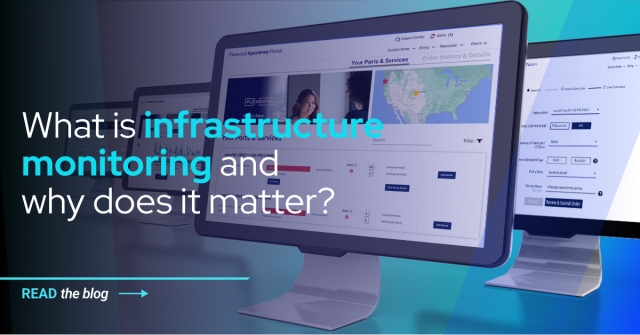
Constant vigilance is the price of operational excellence. External expertise and continuous monitoring capabilities help enterprises maintain the visibility they need without overwhelming internal resources. Learn more about the fundamentals in What is Infrastructure Monitoring.
Achieving a future-proof IT infrastructure
The path to infrastructure that can support the next decade of digital transformation rests on three strategic pillars.
Governance
Establishes the frameworks, controls, and accountability structures that enable speed without sacrificing security or compliance. It ensures that modernization efforts align with business objectives and that AI initiatives operate within appropriate ethical and operational guardrails.
Resilience
Builds infrastructure capable of absorbing disruption and scaling with demand. It prioritizes continuous availability over reactive recovery and treats performance optimization as a strategic imperative rather than a technical detail.
High-density foundation
Provides the physical infrastructure that modern workloads require. Purpose-built colocation, rich interconnection, and managed services create capabilities that most enterprises cannot develop internally.
These pillars reinforce each other. Governance without resilient infrastructure creates policies that cannot be enforced. Resilience without governance produces systems that scale chaos along with capacity. Infrastructure without governance and resilience planning delivers raw capability without the controls needed to deploy it safely.
Investing in a comprehensive future-proof infrastructure strategy represents the clearest path to long-term digital competitive advantage. Organizations that delay these investments will find themselves constrained by infrastructure limitations while competitors accelerate. The gap between leaders and laggards widens with each passing quarter.
The goal is not merely survival. The enterprises that thrive in the next decade of digital change will be those that build infrastructure capable of anticipating and enabling that change, not simply reacting to it. That work begins with an honest assessment of current capabilities, a clear vision of future requirements, and partners who have already solved the problems you are only beginning to face.
Conclusion
Ready to build a comprehensive infrastructure roadmap?
Schedule a consultation to discuss your specific requirements or download the State of AI Infrastructure Report for deeper insights into capacity planning and AI readiness benchmarks.