

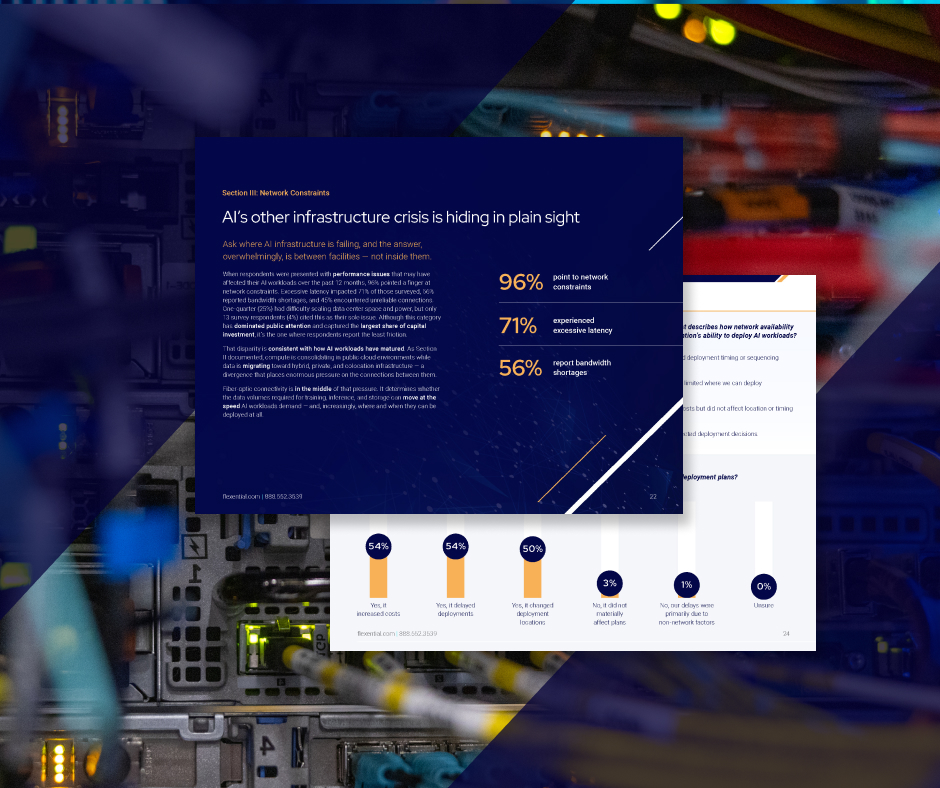


A hosted private cloud simplifies data governance by building residency, access, audit, and retention controls into a dedicated environment. This playbook shows how that works for the workloads carrying the most regulatory weight, and what to look for in a provider.
Public cloud gives you a capable platform and a set of controls you have to assemble yourself. A hosted private cloud arrives with those controls already integrated and provider-operated, which changes what governance costs you in people, time, and audit risk. Flexential's verified VMware Hosted Private Cloud on the FlexAnywhere platform is built that way, a governance-ready environment with residency and data protection part of the platform itself.
It is written for executives accountable for regulated workloads, the people who answer to auditors and regulators rather than the ones configuring the console. Performance is assumed as a baseline, and governance is what the decision comes down to, the part most providers underplay. The three pillars ahead cover
- why a hosted private cloud fits
- how to evaluate providers across the control domains that matter
- how data protection belongs inside the environment itself.
Why a hosted private cloud simplifies data governance
Single-tenant isolation versus multi-tenant shared responsibility
A hosted private cloud gives you a dedicated, single-tenant environment that the provider manages with governance controls already in place. Public cloud runs on a shared-responsibility split, where the provider secures the underlying platform while you own the configuration that governs your data.
{{statBigOne}}
That split is where a lot of exposure begins, because the controls exist but sit unassembled until someone on your team wires them together correctly. Flexential Cloud Services across the FlexAnywhere platform take that assembly work off your team and operate the environment as a governed whole.
Where DIY public cloud leaves governance gaps
Cloud data governance tends to fail in public cloud along a few predictable lines: storage that gets misconfigured and left exposed, regions that multiply until no one can say where a dataset actually resides, logging that varies from one service to the next, data residency that no one can confirm, and retention settings that drift out of policy as teams move quickly. None of these are rare, and every item on that list is an audit finding waiting to happen.
The executive cost of governance-by-assembly
Every control you assemble yourself in public cloud has to be built, staffed, and kept current, which is why governance-by-assembly shows up on the balance sheet as headcount and on the risk register as audit exposure. A private cloud that arrives governed removes most of that standing cost. This is the trade a CIO is actually making when deciding where regulated workloads live, even when the decision gets framed as a purely technical one.
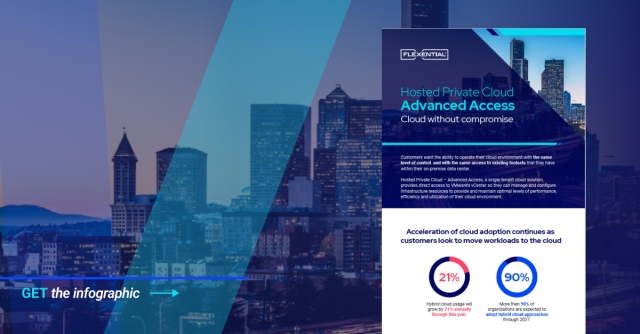
Our infographic on delivering cloud without compromise shows what that integrated governance looks like in practice.
The four control domains for evaluating private cloud providers
Choosing among private cloud providers gets easier with a framework that scores each one on the controls an auditor cares about. Uptime and price still matter, though they say little about whether the environment can prove how it governs data. The domains below are where that gets decided.
{{statBigTwo}}
Data residency and sovereignty
Data residency is about where your data physically lives and whether you can pin it to a specific regulatory jurisdiction. For regulated industries, that is a primary reason to choose one of the private cloud providers over another, since a workload under GDPR, HIPAA, or state privacy law may be constrained to particular locations. A national data center footprint is a real governance capability here, because it lets you place data where the rules require and keep it there. Flexential national data center coverage gives you that residency control directly.
Access control, logging, and auditability
Strong cloud data governance depends on knowing exactly who can reach what and being able to prove it afterward. That calls for role-based access control with real granularity, least-privilege enforcement as the default, access logs that cannot be altered, and clean integration with your SIEM so activity is captured where your security team already watches. When those pieces are built into the environment, producing evidence for an auditor becomes a matter of retrieval.
Compliance attestations and audit-ready evidence
A hosted private cloud should come with third-party attestations already in hand, including SOC 2, HIPAA, and PCI DSS, along with clear mapping between those frameworks and the controls running in your environment.
The practical test for any provider is what it can produce on demand, so ask to see the control mappings and the evidence a CIO would need to hand an auditor without a scramble.
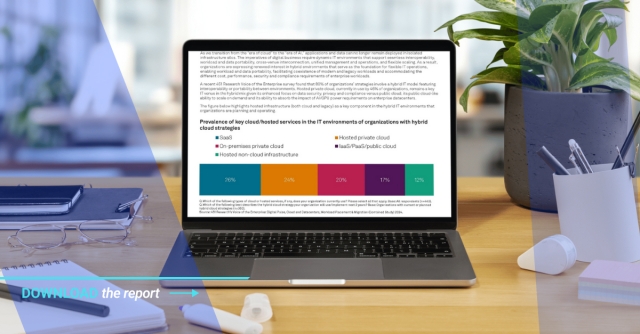
Flexential compliance management supports that kind of readiness, and for the wider business case, the 451 Research Business Impact Brief on how hosted private cloud figures prominently in the hybrid IT mix sets the governance argument in market context.
Building data protection and retention into the environment
Backup and retention as governance controls
Data protection is the fourth control domain, and backup and retention are how it gets enforced. In enterprise cloud solutions built for governance, retention policy is applied by the platform itself, so data is held for the required period and disposed of on schedule without depending on anyone to remember. That turns retention from a manual promise into an enforced control, which is exactly what an auditor is looking for.
Recoverability as a compliance requirement
For regulated data, recovery is a control you have to prove. Retention mandates and the everyday reality of ransomware mean an executive must show that data can be restored intact and on time, giving recoverability the same rigor as any other control. A hosted private cloud makes that provable when data protection is part of the environment, and Flexential integrated data protection and DRaaS give recovery the evidence trail compliance expects.
{{statBigThree}}
Integrated data protection versus bolt-on public cloud backup
The gap between integrated protection and bolt-on backup shows up in day-to-day operations and again in audits. When backup and recovery are part of one governed environment, there is a single place to set policy, verify restores, and produce evidence. When protection is stitched together from separate public cloud services, every seam becomes something to manage and something to explain to an auditor. Consolidated cloud services lower both the operational load and the audit surface.
The Disaster Recovery Checklist walks through validating that resilience in practice.
Achieving governance-ready cloud for regulated workloads
The three pillars come together into a single operating picture: governance controls integrated by design, providers evaluated across the four control domains, and data protection built into the environment.
Flexential brings specific proof to that claim. It holds Broadcom's VMware VCSP Pinnacle tier and a verified VMware Hosted Private Cloud, backed by national data center coverage for residency and integrated data protection across the FlexAnywhere platform. If a VMware renewal is on your horizon, the blog asking whether your VMware renewal is arriving before your strategy is ready is worth reading before you commit.
For regulated workloads, a hosted private cloud is the shortest path from a governance requirement to a demonstrable control. Competitors tend to lead on performance, and the difference that lasts is governance designed into the environment rather than assembled after the fact.
Conclusion
When you are ready to confirm your governance requirements can be met, schedule a consultation with our team or explore Flexential Hosted Private Cloud.