

The high-tech backbone behind university research breakthroughs
The cancer researcher training AI models to identify tumor patterns. The climate scientist running atmospheric simulations across decades of weather data. The economist modeling market behaviors with millions of variables. Each represents the new reality of academic research—discoveries that depend as much on computational infrastructure as intellectual insight.

Universities are finding out that their commitment to cutting-edge research now requires a reckoning with infrastructure investment. Research expenditures reached $108.8 billion in fiscal year 2023, an 11.2% increase that reflects the explosive growth of data-driven discovery. Computing demands are outpacing efficiency improvements, creating a widening chasm between what researchers need and what campus facilities can deliver.
The mismatch is already reshaping the competitive dynamics of research. Although universities fuel scientific progress across disciplines with breakthrough discoveries, their intellectual leadership increasingly depends on computational capabilities that many campus facilities cannot support. They find themselves caught between growing demands and constrained resources while making infrastructure decisions that will determine their research competitiveness for the next decade.
Strong research infrastructure creates a multiplier effect on progress. Better computational capabilities enable faster processing, which accelerates discoveries, which attracts more grant funding, which supports more ambitious research. A university that falls behind in this cycle risks slowing momentum and losing talented researchers and students who expect access to advanced technological resources.
The infrastructure challenge matrix
Universities face complex constraints that make next-generation research on campus difficult. Modern AI and high-performance computing demands have changed the infrastructure equation. Servers with embedded accelerators now account for 70% of AI infrastructure spending, up 178% in the first half of 2024, and that spending will eclipse $200 billion by 2030. Most campus facilities weren't designed to handle these categories of power density.
Beyond the server racks, universities must consider maintenance for the data centers that house all this infrastructure. High-density workloads require cooling so the chips and servers don't overheat. Liquid cooling has become the default when constructing new data centers, but retrofitting on-campus facilities to incorporate it is expensive and highly intrusive because it often requires complete overhauls of electrical and mechanical systems. In some cases, this means moving research off campus. For example, a team studying protein folding using AI models might find that their computational requirements exceed what the campus data center can deliver.
University budget cycles, typically planned years in advance with limited flexibility, clash with these new computing requirements. Most university IT departments lack the expertise required to manage GPU-dense environments. The question becomes whether universities have the organizational muscle to design, deploy, and maintain modern data center infrastructure that can scale over time.
Time pressures also make traditional infrastructure development impractical. Research grants operate on specific timelines, and delays in computational capability can mean the difference between breakthrough discoveries and missed opportunities. Medical researchers studying cancer protocols can't wait two years for campus infrastructure upgrades. They need access to advanced computing now.
The new operating model
Universities are responding by rethinking their approach to research infrastructure, moving beyond on-campus models toward more flexible, partnership-based off-site solutions.
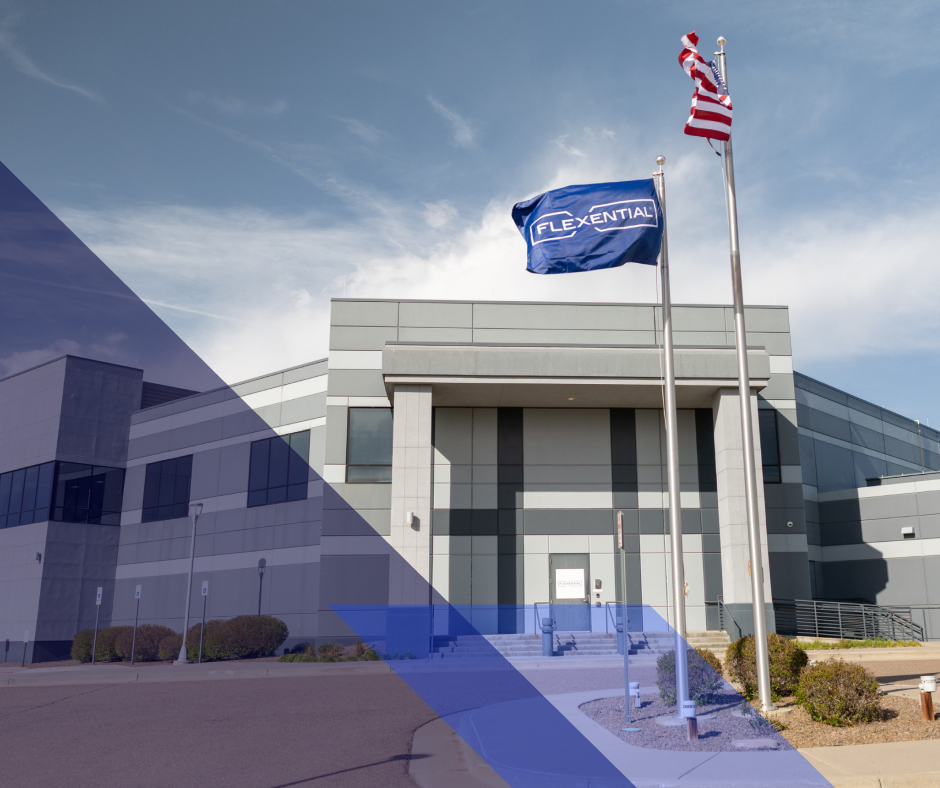
Some institutions are forming relationships with data center operators for their most demanding workloads and maintaining on-campus infrastructure for routine computing needs. This hybrid approach allows access to specialized capabilities without abandoning existing investments. For example, infrastructure for The University of Pennsylvania's new Penn Advanced Research Computing Center (PARCC) will be housed at the Flexential Philadelphia-Collegeville data center, which was designed to support the demands of large-scale AI and high-compute workloads. By leveraging Flexential NVIDIA-powered infrastructure within a purpose-built facility certified under the NVIDIA DGX-Ready Data Center program, Penn doubled its processing capabilities while preserving the ability to scale further as research demands grow.
By enabling scale at the infrastructure level, Flexential makes it possible for Penn to experiment with new ways of allocating capacity. "Condo-style" resource sharing allows each of Penn's 12 schools to access high-performance computing based on their research cycles — something that would be prohibitively expensive to maintain independently.
Universities are also recognizing the cost of dedicating valuable campus real estate to servers and cooling equipment that could be used for classrooms, laboratories, or student facilities. Practically, the optimal solution is to keep core academic space on campus and turn to outside partners for high-demand computing.
Building for tomorrow's research
The fundamental challenge for universities is investing in advanced computing infrastructure while staying true to their mission — and those that do will recognize how well this approach enables innovation.
Universities have several paths forward, each with distinct advantages and trade-offs. Some will invest in campus infrastructure upgrades, accepting the costs and complexity in exchange for complete control. Others will form consortia with peer institutions, sharing resources and expertise. Still others will develop hybrid models that combine on-campus capabilities with partnerships for specialized workloads.
The common thread among successful approaches is balancing immediate needs with long-term requirements, proximity with necessity, and institutional independence with collaborative advantages. The Flexential role at Penn, as well as its national platform and proven ability to deliver GPU-dense environments, shows that universities don't need to consider these trade-offs alone.
University leaders should evaluate their infrastructure readiness now, mapping their research computing needs against current capabilities and developing plans that position themselves for success. The most prestigious institutions will provide their brightest minds with the technology that can push the boundaries of human knowledge.
Connect with Flexential today to see how we can help your institution scale computing resources for tomorrow's research.

Patrick Doherty
Chief Revenue Officer
Patrick leads sales, sales operations, marketing, solutions engineering, channel and commercial management for Flexential and is responsible for the company’s focus and revenue growth investments. A 20-year-plus veteran of the technology industry, Patrick has a long record of success across a variety of fields, including sales, marketing, strategy and product development. He joined the company in 2017.
Before joining Flexential, Patrick was U.S. President for OnX Enterprise Solutions, where he helped transition the legacy VAR to a services-led model. Patrick was also Vice President of Sales for North America at Unisys, where he led sales teams in crafting IT solutions for large enterprises and public sector clients. He also held several positions at Sungard Availability Services, including Executive Vice President of Sales and Marketing, and sales leadership roles at AT&T.
Patrick received his bachelor’s degree in Marketing from Saint Joseph's University.