

Build-to-suit data centers: What enterprises should know
Learn when build-to-suit data centers make sense, and when wholesale or powered shell models offer faster, more flexible enterprise alternatives.
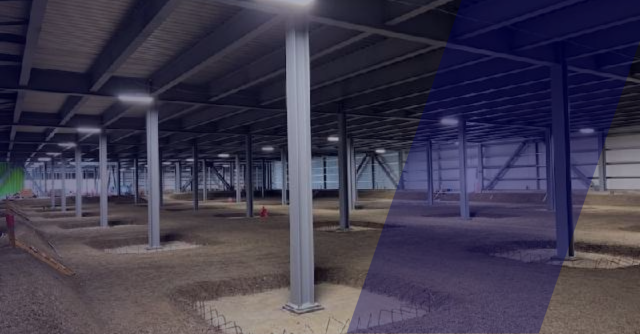
A build-to-suit data center is a custom facility designed and constructed to meet the exact specifications of a single tenant. It sounds ideal on paper: you get exactly what you want, where you want it, configured precisely for your workloads. But for most enterprises, the reality involves multi-year timelines, long-term lease commitments, and the risk that your requirements will change before the facility is even finished.
Understanding when build-to-suit makes sense, and when it doesn't, can save years of capital commitments and operational headaches.
Understanding enterprise data center delivery models
When enterprise IT leaders evaluate data center options, they typically encounter three delivery models: build-to-suit (BTS), powered shell, and wholesale colocation. Each serves different needs, and the right choice depends on timeline, capital strategy, risk tolerance, and how much control you actually need.
Why delivery models shape infrastructure strategy
The delivery model you select has lasting consequences for your infrastructure planning.
Time to operational capacity varies dramatically. According to industry benchmarks, a typical data center build takes 18 to 30 months from concept to commissioning. BTS projects at the larger end of that range often stretch longer, especially in markets where grid capacity is constrained or new substations are required.
Capital structure differs across models as well. BTS arrangements shift construction costs to operational expenses through long-term leases, but they still require significant planning investment and financial commitments that typically span a decade or more.
Risk allocation is another consideration. With build-to-suit, the tenant carries development risk: permitting delays, construction cost overruns, and the possibility that requirements change before the facility is complete.
Scalability varies, too. A purpose-built facility can accommodate future growth if planned correctly, but changing requirements mid-construction is expensive. Wholesale colocation allows organizations to add capacity incrementally as needs evolve.
Build-to-suit data centers
A build-to-suit data center is constructed from the ground up according to a customer's specific requirements for location, design, power density, cooling, security, and resiliency. The customer works with a developer who handles land acquisition, design, and construction, then leases the completed facility under a long-term, triple-net lease structure.
Structure and ownership considerations
In a BTS arrangement, the developer owns the facility and the tenant leases it. The developer covers land acquisition, design, and construction costs for the building shell and core infrastructure. The tenant is responsible for internal fit-out: racks, servers, storage systems, and networking equipment.
This structure allows enterprises to avoid the capital expenditure of building and owning a data center outright, converting what would be a balance sheet liability into an operating expense. The tradeoff is a long-term commitment, with lease terms that often run a decade or longer and limited options for early exit.
Where build-to-suit delivers the most value
Build-to-suit makes the most sense for organizations with highly specific, predictable, long-term capacity needs that existing facilities cannot meet. This typically includes hyperscale cloud providers needing 40 megawatts or more of custom-configured capacity (the industry threshold commonly cited for hyperscale classification). It also includes organizations with unique compliance requirements demanding isolated infrastructure, or companies consolidating multiple facilities following a merger or acquisition.
Limitations enterprises should evaluate
For most enterprises, build-to-suit presents challenges that often outweigh the benefits.
Extended timelines create business risk
According to Wood Mackenzie, lead times for large power transformers now average around 2.5 years, with some exceeding three years. For data center projects requiring grid upgrades, these equipment delays compound construction timelines significantly. Organizations responding to enterprise AI workloads or competitive pressures often cannot afford to wait.
Capital exposure presents additional challenges
The tenant commits to a long-term lease before the facility exists. If business conditions change through a merger, strategic pivot, or technology shift, the organization remains locked into infrastructure designed for a different set of requirements.
The customization premium may not deliver proportional value
Many enterprises assume they need a fully custom facility when their requirements could be met by existing wholesale colocation options that already offer high-density power, flexible configurations, and strong security.
Why many enterprises look beyond build-to-suit
The market reality is that most enterprises searching for build-to-suit data center solutions are trying to solve a capacity problem, not necessarily committed to the BTS model itself.
Getting infrastructure online quickly matters more than it used to. In a business environment shaped by trends in enterprise IT strategy, waiting years for infrastructure puts organizations at a competitive disadvantage when rivals can deploy in months.
Modern IT strategies also favor flexibility, as organizations now distribute workloads across on-premises systems, colocation facilities, and multiple cloud providers, which favors delivery models that allow incremental expansion rather than large upfront commitments.
Organizations also increasingly prefer to shift infrastructure risk to providers with the expertise and scale to manage it efficiently, rather than absorbing development and operational risk internally.
Powered shell and wholesale colocation alternatives
For enterprises that need capacity without the timeline and commitment of build-to-suit, two models are worth considering.
Powered shell data centers
A powered shell includes the physical structure, power to the site, and connectivity infrastructure, but leaves the interior fit-out to the tenant. The tenant installs their own UPS systems, generators, and cooling systems, maintaining control over design while avoiding the full timeline of ground-up construction. The tradeoff is responsibility for interior construction and ongoing maintenance of critical systems.
Wholesale colocation for enterprise scale
Wholesale colocation offers dedicated space, including private cages, suites, or entire data halls, within an existing, fully operational data center. The provider owns and operates the building, power infrastructure, and cooling systems.
Because the infrastructure already exists, organizations can move in quickly, forecast costs accurately, and rely on the provider's operational expertise rather than building those capabilities internally.
For organizations weighing retail vs. wholesale colocation, wholesale provides dedicated space for those who need more capacity and autonomy without multi-year construction projects.
Evaluating tradeoffs across data center models
The correct delivery model depends on how you weigh three factors: time, money, and control.
If speed matters most, wholesale colocation wins. If you need a facility configured to exact specifications and can wait years for it, build-to-suit may be worth the tradeoff. If you want design control without the full BTS timeline, a powered shell sits in between.
Financially, build-to-suit converts capital expenditure to operational expense through long-term leases, but the commitment is substantial. Wholesale colocation offers more adaptable terms and shifts facility risk to the provider.
On control, build-to-suit offers maximum customization at the cost of flexibility. Wholesale colocation offers less say in facility design but considerably more flexibility in capacity management. For most enterprise transformation efforts, speed and flexibility end up mattering more than customization.
Where Flexential fits
Build-to-suit makes sense for hyperscalers like Amazon and Google that have the capital, timeline, and operational teams to build and manage their own facilities. But most enterprises need capacity and reliability without the overhead of constructing and running a private data center.
That's where Flexential fits. With more than 40 data centers across 18 markets, Flexential provides wholesale colocation that delivers the performance enterprises need on business timelines, not construction timelines. The FlexAnywhere platform connects these facilities through a 100Gbps private network backbone with access to more than 360 carriers and direct connections to AWS, Microsoft Azure, Google Cloud, and Oracle Cloud.
For regulated industries, Flexential maintains certifications across ISO 27001, SOC 1/2/3, HITRUST, HIPAA, PCI DSS, FISMA, and ITAR, supporting healthcare, financial services, government, and defense requirements.
High-density deployments up to 80+ kW per cabinet and advanced liquid cooling support AI, machine learning, and GPU-intensive workloads that would traditionally push organizations toward custom builds. As an NVIDIA DGX-Ready Data Center provider, Flexential delivers the infrastructure these workloads demand in weeks or months rather than years, backed by a 100% uptime SLA on power and network availability and 90%+ customer retention.
Organizations pursuing wholesale colocation and digital transformation goals can explore Flexential colocation solutions or contact our team to discuss what you need.
Frequently asked questions about data center models
How is a build-to-suit data center different from a powered shell?
A build-to-suit data center is a fully custom facility that includes all power, cooling, and infrastructure systems, delivered ready for IT equipment installation. A powered shell provides the building structure and power to the site, but leaves interior infrastructure like UPS, generators, and cooling to the tenant. Build-to-suit offers more customization but longer timelines, while powered shell offers faster occupancy but requires tenant fit-out.
When does wholesale colocation make more sense than build-to-suit?
Wholesale colocation fits better when an organization needs capacity in months rather than years, prefers predictable operational expenses over long-term lease commitments, wants to scale incrementally, or can meet requirements with existing high-quality infrastructure. Most enterprises outside the hyperscale tier find that wholesale colocation delivers the capacity, security, and compliance capabilities they need without the extended timeline and risk of a custom build.
How long does it take to deploy a build-to-suit data center compared to other models?
Industry data suggests build-to-suit projects typically take 18 to 30 months under favorable conditions. In markets with power availability constraints or where grid upgrades are required, timelines can extend considerably longer due to equipment procurement delays. Powered shells can reduce this since the building structure exists, but interior fit-out still takes time. Wholesale colocation offers the fastest path because infrastructure is already operational.
How do data center delivery models impact long-term flexibility and risk?
Build-to-suit provides maximum customization but limited flexibility once the project is underway. Lease terms often span a decade or more, and specifications get locked in early. Wholesale colocation shifts facility risk to the provider and offers more flexibility, allowing organizations to expand, contract, or redistribute capacity as needs evolve.