

Liquid cooling for high-density colocation
Liquid cooling has become essential for organizations deploying high-density colocation infrastructure. As AI, machine learning, and GPU-intensive applications push rack densities far beyond what traditional air cooling can support, modern liquid cooling delivers the thermal performance needed to maintain reliability, improve efficiency, and lower total cost of ownership.
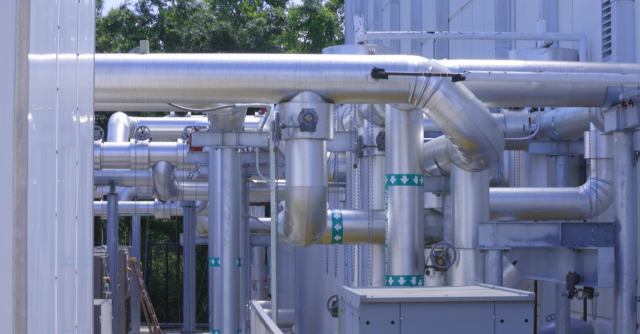
For IT leaders planning large-scale AI or HPC environments, the financial benefits are significant. Higher compute density per rack reduces physical footprint, energy use, and long-term hardware costs. These gains make liquid cooling a direct contributor to TCO improvements across modern data center deployments.
Why high-density workloads demand better cooling
The infrastructure profile for today’s compute-heavy platforms has shifted. Traditional cooling methods cannot keep up with the heat output generated by AI training models, high-performance computing clusters, and GPU-accelerated services.
The rise of AI/ML and GPU-driven compute density
AI and machine learning generate significantly more heat than conventional applications. GPU-dense racks can draw 30-50kW, compared to the 5-10kW typical of traditional deployments. Training large language models, running inference at scale, or processing complex analytics requires dense configurations of GPUs working continuously, generating sustained thermal loads. Without adequate cooling, performance throttles, hardware degrades faster, and operational costs climb.
The limits of traditional air-cooled colocation
Air cooling works well for moderate density deployments, but it hits physical limits around 15-20kW per rack. Beyond that threshold, facilities need extensive ductwork, increased airflow velocity, and more floor space dedicated to cooling infrastructure rather than compute equipment.
The result is stranded capacity where racks can't be fully utilized because the cooling system can't keep up with the thermal load. For organizations deploying high-density colocation, these limitations directly impact the value proposition. You're paying for rack space and power you can't fully use.
How liquid cooling enables higher rack densities
Advanced cooling solutions remove heat more efficiently than air, supporting the power densities that AI and HPC applications require.
Direct-to-chip cooling for predictable thermal performance
Direct-to-chip cooling circulates liquid through components mounted directly on heat-generating processors. This approach removes heat at the source before it enters the data center environment, maintaining consistent temperatures regardless of ambient conditions.
With direct-to-chip systems, you can plan capacity more accurately because thermal performance doesn't degrade as racks fill up. Hardware runs at optimal temperatures, which extends component life and reduces replacement costs over time. Since most heat is captured in the liquid loop, air handling requirements drop significantly, cutting energy costs.
Rear-door heat exchangers as a transitional option
Rear-door heat exchangers mount on rack doors and cool exhaust air as it leaves the cabinet. They can support rack densities up to 25-30kW without requiring facility-wide cooling upgrades, providing a path to higher density for organizations not ready to commit to full liquid cooling infrastructure.
Immersion cooling for extreme-density workloads
Immersion cooling submerges entire servers in non-conductive fluid, supporting densities that often exceed 100kW per rack. This makes it ideal for cryptocurrency mining, AI research clusters, and other applications where maximum compute per square foot drives economics. While capital cost is higher, immersion cooling can deliver the lowest total cost of ownership for extreme-density deployments.
For more context on different cooling strategies, each method serves specific deployment scenarios and cost optimization goals.
The TCO advantage of liquid cooling in colocation
When evaluated over a three-to-five-year deployment, these systems consistently deliver lower operating costs for high-density applications.
Higher compute per square foot reduces physical footprint cost
Real estate represents one of the largest components of colocation expenses. Liquid cooling in data centers allows organizations to deploy more compute capacity in less space, directly reducing space-related costs.
Consider a deployment requiring 300kW of compute capacity. With traditional air cooling at 10kW per rack, you need 30 racks. With advanced cooling supporting 30kW per rack, you need only 10 racks. That's two-thirds less floor space, fewer network connections, and simplified cable management.
Lower cooling overhead and improved PUE
Power Usage Effectiveness (PUE) measures how much energy goes to IT equipment versus facility overhead. Traditional air-cooled facilities typically achieve PUE between 1.5 and 1.8, meaning 50-80% overhead. Advanced cooling can push PUE below 1.2, reducing overhead to 20% or less.
The energy savings directly reduce operating costs. If you're consuming 1MW for compute, improving PUE from 1.6 to 1.2 saves 400kW of facility overhead. Over a year, that's 3.5 million kWh that doesn't need to be purchased, cooled, or removed as waste heat.
For organizations prioritizing energy efficient data centers, modern cooling provides measurable sustainability benefits alongside cost reductions.
More reliable performance and longer hardware lifespan
Temperature directly affects component reliability. For every 10°C increase in operating temperature, semiconductor failure rates roughly double. Advanced cooling maintains lower, more stable temperatures than air cooling, which translates to longer hardware lifespans and fewer unplanned replacements.
Extended hardware life improves cost efficiency in two ways. First, capital equipment depreciates over more years, lowering annual costs. Second, operations teams spend less time managing failures, which reduces labor costs and minimizes downtime risks.
Energy efficiency and sustainability gains
Beyond PUE improvements, these systems often support warmer coolant temperatures, which opens opportunities for free cooling during more hours of the year. Some can operate with coolant temperatures above 40°C, well above the limits of air cooling. Higher operating temperatures mean less mechanical refrigeration, the most energy-intensive part of cooling systems.
High-density colocation use cases
Advanced cooling and high-density colocation align naturally with specific application types where compute intensity justifies the infrastructure investment.
AI/ML training clusters
Training large AI models requires sustained, intensive GPU utilization. A single training run might use hundreds of GPUs continuously for days or weeks. The density and duration of these applications generate thermal loads that air cooling struggles to manage cost-effectively.
Modern cooling solutions pack more GPUs per rack, reducing network latency between nodes and improving training performance while keeping energy costs manageable relative to the compute capacity delivered.
HPC workloads
High-performance computing for scientific research, financial modeling, or engineering simulation needs dense compute running for extended periods. HPC clusters benefit from thermal predictability. When running complex simulations that might take days to complete, consistent performance without thermal throttling ensures results arrive on schedule.
GPU-intensive SaaS platforms
Cloud gaming, video processing, graphics rendering, and other GPU-accelerated services require dense GPU deployments to serve customer demand cost-effectively. These platforms run continuously, making energy efficiency and hardware longevity critical to unit economics.
Advanced cooling helps SaaS providers reduce infrastructure costs per user served. Higher density means less real estate per GPU, lower cooling costs per instance, and better hardware utilization.
What to look for in a high-density colocation provider
Selecting the right high-density colocation provider requires evaluating capabilities that directly impact your deployment's performance and cost structure.
Maximum kW per rack supported
Confirm the facility can deliver the power density your applications require. Ask for specific numbers: what's the maximum kW per rack the infrastructure supports, and what cooling method enables it? Providers should be able to demonstrate they've deployed similar densities successfully.
Don't assume "high density" means the same thing to every provider. Some consider 15kW high density, while others routinely support 40kW or more.
Power redundancy and availability
High-density deployments concentrate significant compute capacity in small spaces, which makes power reliability even more critical. Understand the power distribution architecture and how it's implemented at both the facility and rack level.
Ask about actual uptime history rather than just design specifications. Real-world performance over time reveals how well the facility manages power systems under operational conditions.
Cooling design limits and liquid cooling readiness
Evaluate whether the facility's cooling infrastructure can support advanced cooling systems. What types do they support? Is the coolant distribution infrastructure already in place, or would your deployment require facility modifications?
Understand the cooling system's limits. At what point does adding more racks start degrading thermal performance? Facilities designed for high density include sufficient cooling capacity to maintain consistent temperatures as occupancy increases.
Interconnection and cloud adjacency requirements
High-density applications often need high-bandwidth network connectivity to cloud platforms, storage systems, or other infrastructure components. Evaluate the facility's interconnection options: what carriers are present, what's the path to major cloud providers, and how does network architecture affect latency?
How Flexential supports liquid cooling and high-density deployments
At Flexential, we build our data centers to support modern high-density deployments at scale. Our facilities deliver the power capacity, cooling infrastructure, and interconnection needed for GPU-intensive and AI-driven workloads.
We support multiple cooling approaches, including direct-to-chip cooling and rear-door heat exchangers, with rack densities that reach 40 kW and beyond. Our designs maintain consistent thermal performance as deployments expand, which helps organizations control cost and improve reliability.
Our data centers also provide redundant power, diverse network connectivity, and cloud adjacency to major providers. This gives teams the flexibility to operate AI, HPC, and GPU-intensive workloads with the reliability and efficiency required for mission-critical environments.
If you’re planning high-density infrastructure, we can help you design a configuration that maximizes performance while improving long-term cost efficiency. Explore our ebook, Why liquid cooling matters now, or contact our team to discuss your requirements and learn how Flexential can help optimize your infrastructure for performance and cost efficiency.
Frequently asked questions
What is liquid cooling in a data center?
Liquid cooling uses fluid rather than air to remove heat from IT equipment. The liquid absorbs heat more efficiently than air, supporting higher power densities while using less energy. Common approaches include direct-to-chip cooling, rear-door heat exchangers, and immersion cooling.
How does liquid cooling support high-density racks?
These systems remove heat more effectively than air, allowing more powerful equipment to operate in the same physical space without overheating. This supports rack densities of 30-50kW or higher, compared to the 10-15kW maximum for traditional air cooling.
Is liquid cooling more efficient than air cooling?
Yes, significantly more efficient for high-density deployments. It reduces facility energy consumption by lowering cooling overhead, often improving PUE from 1.5-1.8 down to 1.2 or better.
What workloads benefit most from high-density colocation?
AI and machine learning training, high-performance computing, and GPU-accelerated applications benefit most. These deployments require sustained high compute utilization, and the improved density and efficiency directly reduce long-term costs while supporting performance requirements.
How does high-density colocation reduce TCO?
High-density colocation reduces total cost of ownership by consolidating more compute into less space (lowering real estate costs), improving energy efficiency (reducing power and cooling expenses), and extending hardware lifespan through better thermal management. Together, these factors typically reduce operational costs by 20-40% compared to traditional deployments.
What should I look for in a colocation provider for liquid cooling deployments?
Look for proven experience with advanced cooling systems, infrastructure that supports the power density your applications need, redundant power distribution, strong network connectivity, and a track record of reliable operations.