


AI investment is moving from ambition to accountability
Enterprise AI investment remains strong, but expectations for financial returns are evolving. Infrastructure strategy is becoming increasingly important to turning AI investment into measurable, sustainable business value.

For much of the recent acceleration in enterprise AI adoption, the conversation has centered on ambition: what AI could do, how quickly organizations could deploy it and how it might transform their businesses. As more initiatives move beyond experimentation, however, a different conversation is taking shape around what those investments are delivering and what it will cost to sustain them.
The Flexential State of AI Infrastructure Report reveals an interesting shift. While 70% of surveyed enterprise IT leaders are allocating at least 10% of their IT budgets to AI initiatives, expectations for rapid financial returns have moderated. Across the annual surveys, the proportion anticipating measurable benefits within a year fell by 15 percentage points, to 36%.
These findings do not necessarily signal diminishing confidence in AI. Rather, they suggest enterprises are confronting the practical realities of translating AI investments into business outcomes, including the cost, complexity and availability of the infrastructure required to support them.
As AI investment moves from ambition to accountability, infrastructure strategy deserves a closer look.
The definition of AI success is changing
Early conversations about enterprise AI often emphasized its potential to generate revenue, unlock new business opportunities and create competitive differentiation. Those objectives remain relevant, but organizations are increasingly looking for value within their existing operations as well.
In our research, operational efficiency and cost reduction emerged as the leading measures of AI success, ahead of revenue growth.
That distinction has important implications for infrastructure planning. An AI application designed to improve internal productivity or streamline business processes is evaluated differently from one intended to create an entirely new revenue stream. Both need reliable performance, but the economics supporting them may be very different.
For efficiency-focused initiatives in particular, the cost of delivering an AI capability becomes part of the value equation. Improvements in productivity, automation or operational performance need to be evaluated against the ongoing expense of compute, storage, networking, software and infrastructure management.
An AI application can deliver meaningful operational improvements while still falling short of its financial objectives if the environment supporting it is disproportionately expensive to operate.
An AI budget is not the same as AI readiness
Organizations may have the funding, executive support and business case to advance AI initiatives without having the infrastructure required to execute them.
When respondents to our survey identified their biggest obstacle to expanding AI, infrastructure was cited 40 times as frequently as budget.
This highlights a disconnect between financial commitment and execution readiness. Access to capital does not automatically translate into available power, suitable data center capacity, specialized compute, sufficient network performance or the operational expertise required to bring AI applications into production.
Each of these infrastructure requirements can influence both the cost of an initiative and the timeline on which it begins delivering value. A delayed deployment extends the period before anticipated benefits can be realized. Poor network performance can limit application effectiveness, while an infrastructure environment that cannot accommodate growth may require additional investment sooner than expected.
For technology and business leaders alike, AI infrastructure readiness is therefore more than a technical consideration. It is a factor in the financial performance of AI initiatives.
Having the budget to invest in AI and having the infrastructure to realize its value are two different things.
Why infrastructure belongs in the AI ROI equation
Calculating the potential return on AI investments requires more than estimating the cost of a model, application or GPU deployment. As initiatives scale, infrastructure decisions made early in the process can have lasting financial and operational consequences.
Three considerations are particularly important.
Time to value
Infrastructure availability can directly influence how quickly an AI initiative moves from approval to production. Extended hardware procurement cycles, limited power capacity or unexpected connectivity requirements can delay deployment even when the application itself is ready.
For an initiative expected to reduce operating costs or improve productivity, every additional month before production may also represent another month without those anticipated benefits. Access to suitable, scalable infrastructure can therefore be as important to the business case as the initial acquisition cost.
Total cost of operation
Initial AI infrastructure costs are only one part of the investment. As applications move into production, ongoing expenses associated with energy consumption, cooling, compute utilization, data movement, connectivity, maintenance and operational support become increasingly relevant.
Infrastructure choices that appear financially attractive at the outset may become less economical as workloads grow. Conversely, environments with higher initial costs may provide performance, utilization or operational advantages that make them more suitable over the life of the application.
The more meaningful comparison is how much it costs to deliver the required business outcome over time, rather than how much it costs to acquire the infrastructure on day one.
Capital efficiency and utilization
AI demand can be difficult to forecast, particularly as organizations introduce new use cases and move from pilot programs into broader production environments. Purchasing infrastructure for projected peak demand may leave expensive resources underutilized if adoption develops more slowly than expected.
Underestimating demand creates a different problem, potentially limiting performance or delaying expansion when an initiative begins delivering value.
This is where capacity readiness becomes increasingly important. The ability to access additional resources as requirements evolve can help organizations balance investment with actual demand rather than committing prematurely to infrastructure based on uncertain forecasts.
STATE OF AI INFRASTRUCTURE REPORT
AI investment remains strong. Expectations are evolving.
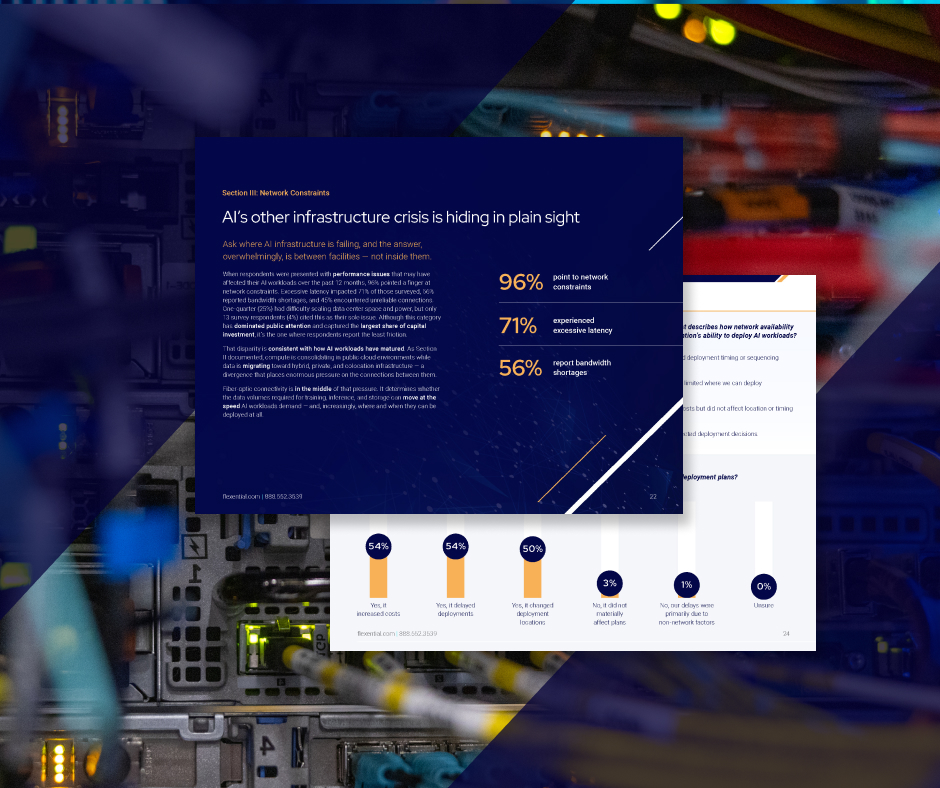
Only 36% of surveyed enterprise IT leaders expect measurable financial benefits from AI within a year, compared with 51% in the previous year's survey. Explore how infrastructure constraints, rising costs and changing measures of success are influencing enterprise AI investment strategies.
Different stages of AI adoption require different investment models
One of the challenges of managing AI budgets is that infrastructure requirements can change considerably throughout the lifecycle of an initiative. The environment that makes financial sense during experimentation may not be the most appropriate environment for sustained production.
During experimentation, organizations may benefit from flexible access to compute resources that allow teams to test models, evaluate applications and establish the viability of a use case without committing to significant dedicated infrastructure.
As applications move into production, priorities may shift toward predictable performance, data governance, operational reliability and more consistent resource utilization. Workloads that were once intermittent may become persistent, changing the economics of how infrastructure is consumed.
At scale, additional considerations emerge around geographic distribution, network performance, power availability and the ability to integrate AI into existing enterprise environments. An infrastructure strategy that cannot accommodate these changes may introduce costly transitions precisely when the business is beginning to realize returns.
This is one reason a hybrid IT approach can be valuable. Rather than relying on a single infrastructure model throughout the AI lifecycle, organizations can evaluate a combination of cloud, colocation, dedicated compute and external AI services based on the operational and financial requirements of each workload.
The objective is not to identify one universally cost-effective environment for AI. It is to retain the ability to align infrastructure investments with changing workload requirements and business objectives.
Infrastructure efficiency supports business efficiency
As operational improvements become a more prominent measure of AI success, enterprises also need to examine the efficiency of the infrastructure delivering those improvements.
An AI initiative intended to reduce business costs may be supported by infrastructure that carries significant unused capacity, requires expensive data movement or introduces additional operational complexity. These expenses may be distributed across multiple IT budgets and environments, making it difficult to understand the full economics of the initiative.
Infrastructure efficiency involves more than reducing spending. It means balancing resource utilization, application performance, operational requirements and scalability so that infrastructure costs remain proportionate to the value being delivered.
That balance requires visibility across the broader environment. Decisions about compute, data placement, connectivity and capacity cannot always be evaluated independently because reducing costs in one area may increase them elsewhere.
For example, placing AI compute in a lower-cost environment may appear attractive until the additional connectivity, data transfer and operational requirements are considered. Similarly, minimizing short-term infrastructure spending may create longer-term constraints that limit an application's ability to scale.
The most effective infrastructure strategies consider these tradeoffs together, supporting both the performance of AI applications and the financial objectives behind them.
Build for sustainable AI returns
The evolution of enterprise AI is introducing a more measured discussion about what success looks like, how quickly it can be achieved and what infrastructure is required to sustain it.
Infrastructure decisions should be part of that discussion from the beginning, rather than becoming an operational or financial consideration after AI applications have already been developed.
Through the FlexAnywhere® Platform, Flexential brings together colocation, cloud, interconnection, data protection and professional services to help enterprises evaluate infrastructure options that align with workload requirements, operational priorities and long-term business objectives.
As organizations continue investing in AI, the opportunity is not simply to deploy more technology. It is to build an infrastructure foundation that supports the transition from AI potential to measurable, sustainable business value.
Explore how enterprise IT leaders are reevaluating AI investment priorities, financial expectations and infrastructure strategies in the State of AI Infrastructure Report or talk with a Flexential infrastructure expert about building flexibility into your infrastructure strategy.