

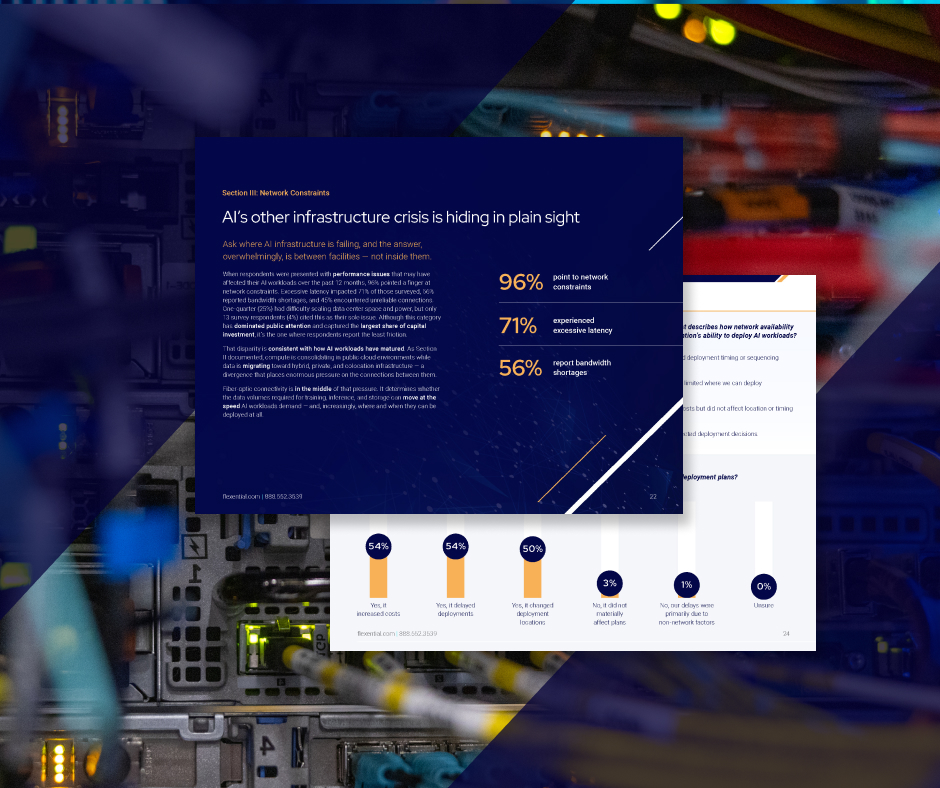


Most guidance on hybrid cloud strategy stops at the blueprint. It walks you through architecture diagrams, migration waves, and platform comparisons, all of which matter while you are standing up an environment and matter far less once you have inherited one that is already in production. The harder work starts after the design is signed off. Hybrid cloud management is the ongoing practice of governing performance, cost, compliance, and vendor accountability across your cloud and on-premises environments, and most of it happens long after anyone drew the architecture.
This playbook is written for the people who own the outcome rather than the design. If you are a Head of IT held accountable for what the environment delivers, and your days are spent deciding where a workload should live, who owns an incident, and why the cloud bill keeps climbing while on-premises capacity sits idle, it was written with you in mind. It works through the three pillars that decide whether a hybrid estate runs well or runs you:
- operational visibility
- governance that holds up across every environment
- disciplined workload placement backed by real cost accountability.
What hybrid cloud strategy means when you're running it
Plenty of enterprises are running hybrid estates they never planned, assembled over years through acquisitions, partial migrations, and choices made by people who have since moved on. For most IT leaders, then, the practical question is how to operate the estate they have actually ended up with, wherever its pieces came from.
{{statBigOne}}
Run decisions versus build decisions
Some infrastructure decisions get made once, and others get made continuously. Architecture is the first kind. You choose a platform, design a network, stand up your landing zones, and then live with those choices for years.
Management is the second kind, and it never really stops. Every week brings another round of it, from which environment a new workload should run in, to how you escalate an issue with a vendor, to whether a system is still compliant after a configuration change, to whose budget absorbs a given cost. That steady stream of operational calls is hybrid cloud management, and it decides whether the environment stays healthy in a way the original build never can on its own.
Many internal teams run short on capacity right here, because the skills hybrid management demands, spanning cloud platforms, colocation, networking, and security, are expensive to hire for and hard to keep. Flexential managed infrastructure services extend a team's reach without adding specialist headcount for every discipline, so your people stay on the work that moves the business while a partner carries the day-to-day operational load.
Visibility fragmentation across cloud and on-premises
You can only manage what you can see, and hybrid cloud infrastructure makes seeing everything unexpectedly difficult. Public cloud brings its own monitoring, the on-premises stack relies on separate tooling, and colocation adds a third layer, so each one shows a slice of the estate while none shows the whole. Left alone, that gap forces teams to reconcile dashboards and export logs by hand, and the blind spots collect precisely where cloud and on-premises meet, which happens to be where a lot of hybrid problems begin.
{{statBigTwo}}
Vendor accountability and the ownership gap
An enterprise hybrid cloud rarely has one owner. Cloud providers hold their platforms, your colocation partner holds the facility, managed service providers hold their portion, and your internal teams hold the rest. On a normal day, that split works fine.
It stops working the moment an incident lands in the space between those parties. The cloud provider points at the network, the network team points at the application, and the colocation contract turns out to cover the power but not the workload. Sorting out who owns the incident can take hours, and the service stays down the whole time.
Closing that gap is its own management discipline. It means mapping every layer to a named owner, writing down who is responsible for what, and agreeing escalation routes ahead of time, so the answer exists before the next incident instead of being invented during it. Our blog on how to manage complex hybrid infrastructures works through simplifying that oversight across cloud, colocation, and on-premises.
Governance across hybrid infrastructure
Governance keeps a hybrid estate defensible and provable. You can run securely and still struggle to demonstrate it to an auditor on the day they ask.
{{statBigFour}}
Workload classification as a governance control
A sound hybrid cloud strategy starts with a written, maintained record of what runs where and why, kept current by the team rather than left to tribal knowledge and diagrams that went stale two years ago.
Score each workload on how sensitive its data is, how much latency it can tolerate, which regulations govern it, and what it costs to run where it currently sits. That record becomes the backbone of your governance. When someone asks why the payment system lives in colocation and not public cloud, the answer is already documented and holds up. Classification looks like paperwork, and it is the control that makes every other governance decision quicker to reach.
Consistent policy enforcement across environments
The structural risk in hybrid cloud management is drift. The cloud team settles into one set of security baselines, access controls, and change-management habits, the on-premises team settles into another, and both look reasonable on their own while leaving seams that attackers and auditors alike know how to find. Consistent enforcement closes those seams by applying the same access model, change control, and security baseline no matter where a workload runs, so a workload never becomes riskier simply because it moved.
Some regulated workloads cannot sit in public cloud at all, and pushing them there creates governance problems that never fully resolve. Flexential compliance-ready colocation gives those workloads a home built to their requirements and shrinks the governance surface you have to defend, because fewer exceptions to track means fewer places for a control to slip.
Consolidated compliance evidence collection
HIPAA, PCI DSS, and SOC 2 do not split their requirements by where a workload happens to live. An auditor will not accept the location of a control as a reason your on-premises evidence is thin, so proof has to come from across your entire hybrid cloud infrastructure at the same time.
That is why continuous collection pays off. Gather compliance evidence steadily, from every environment, in a consistent format, and an audit becomes a matter of assembling a record that already exists instead of rebuilding one under a deadline. For the wider view, the Hybrid IT Strategy industry trends report shows how IT leaders are approaching these calls across their environments.
Workload placement and cost accountability
Placement and cost are the same conversation. Put a workload in the wrong environment and it charges you twice, once on the invoice and again in the performance it fails to deliver.
{{statBigThree}}
Four criteria for hybrid workload placement
A disciplined hybrid cloud strategy scores every workload against four criteria to decide where it belongs.
- Data residency and regulatory requirements. Regulated data, including health records, payment data, and PII, can carry legal limits that rule out certain cloud locations before cost is even on the table.
- Latency and performance. Workloads that need sub-millisecond response or heavy local data throughput usually do better on-premises, or in colocation with dedicated connectivity.
- Cost profile at scale. Steady, predictable compute is generally cheaper on-premises or in colocation, while variable and spiky demand is where cloud elasticity earns its price.
- Operational complexity tolerance. Cloud-native workloads need cloud-native skills, and a team without them carries a genuine cost that belongs in the decision.
Run every workload through all four before you move it. One that wins on cost but fails on data residency is not really a candidate, and scoring them this way turns placement into a choice you can defend.
Cost allocation and right-sizing across environments
IT infrastructure modernization is where cost accountability gets real, and two moves do most of the work. The first is right-sizing to actual usage instead of peak. Most cloud workloads are provisioned for a spike that rarely comes and billed for that headroom every hour, so matching resources to real consumption returns money straight away. Also, take a look at your on-premises footprint and ask whether it earns its fixed cost, or whether those workloads would be cheaper somewhere else.
The second move is allocating cost by workload, team, and business unit. Tie the spend to the team that creates it and accountability follows, reporting sharpens, and the conversations about cutting waste get much easier to have.
The economics of hybrid reward putting each workload where it genuinely fits. Flexential colocation with direct cloud on-ramps delivers predictable cost for steady-state workloads and a fast, direct path to cloud elasticity for the ones that need it, so you stop paying full cloud rates for compute that never spikes.
Vendor SLAs, escalation paths, and review cadence
Cost accountability across hybrid infrastructure runs through your vendors, which makes the agreements worth getting right. Define service levels per environment so expectations match what each platform can deliver, and agree escalation paths before an incident so the question of who to call is already answered when the clock starts. A quarterly review with every major vendor keeps performance, cost, and roadmap in the open, rather than letting them surface only when something breaks. None of this is glamorous, but it is exactly the discipline that separates a hybrid estate you control from one that controls you.
The Smarter cloud, smarter spending ebook goes deeper on making those workload and cost trade-offs well.
Achieving operational control of a hybrid environment
Operational control comes back to the three pillars this playbook has covered: the visibility to see across every environment before you act, the governance that keeps your policies and evidence sound wherever a workload runs, and the placement and cost discipline that put each workload where it performs best and give its cost an owner. A durable hybrid cloud strategy shows itself in the running, in how well the environment performs day to day, how fast a problem finds its owner, and how predictable the spending stays.
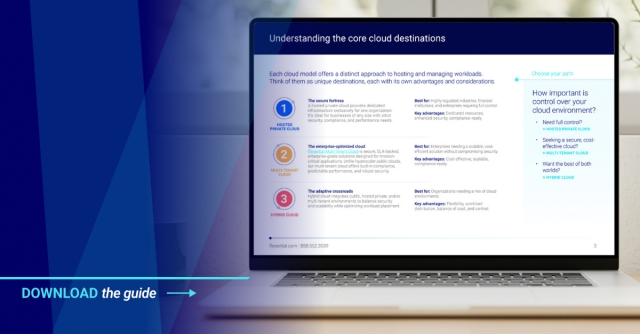
Your estate will keep changing. New workloads arrive, regulations shift, vendors come and go, and the one thing that has to stay steady through all of it is the operating model, the visibility, governance, and cost discipline that let you absorb change without starting over. If you are weighing where specific workloads should sit, the Plot your path to the best cloud choice for your business ebook lays out a framework you can put to use right away.
Conclusion
When you are ready to bring your hybrid environment under a single operating model, explore the FlexAnywhere Platform with our team or request a Fast-Track Cloud Assessment to see where your estate stands today.