


Disaster recovery has matured. Has your program?
Disaster recovery is nearly universal, but having a DR solution in place doesn't necessarily mean an organization is ready to recover. As IT environments grow more complex, true recovery readiness depends on how well technology, processes, people and business priorities work together when disruption occurs.

Disaster recovery used to be a question of coverage: Do you have a plan? Do you have backups? Do you have somewhere to recover? Today, those questions are only the beginning.
In recent research with IT decision-makers, 98% of respondents said their organization has some form of disaster recovery in place. Yet only 38% described their DR program as fully operational. That gap tells an important story. Disaster recovery adoption is nearly universal among respondents, but disaster recovery maturity isn't.
98% of respondents said their organization has some form of disaster recovery in place. Yet only 38% described their DR program as fully operational.
For IT leaders, the conversation is shifting from "Do we have DR?" to a more important question: "How ready are we to recover?"
Having DR is only the starting point
Deploying recovery technology is important, but technology alone doesn't determine whether an organization can recover successfully. A mature DR program connects technology with the people, processes and business priorities required to execute a recovery when conditions are anything but normal.
That means knowing which workloads need to come back first, understanding dependencies across increasingly complex hybrid environments and having clearly defined recovery objectives. It also means maintaining current documentation, establishing clear responsibilities and ensuring the people involved know what to do when a disruption occurs.
Most importantly, organizations need to know whether all of those pieces actually work together. That's where the distinction between having disaster recovery and being recovery ready becomes much clearer.
Testing turns a plan into a capability
A recovery plan that hasn't been tested is still largely theoretical. Regular testing helps organizations validate that applications and data can be recovered within expected timeframes while uncovering dependencies, process gaps and technical issues that may not be obvious on paper.
But maturity isn't simply about checking a "test DR" box once a year. Infrastructure changes, applications move, cloud environments expand and business requirements evolve. Any of those changes can introduce new dependencies or make an existing recovery process less effective.
More mature programs treat testing as an ongoing discipline rather than a periodic exercise. Each test becomes an opportunity to validate assumptions, identify gaps and strengthen the recovery process before an actual outage or cyber event puts it to the test.
Automation can reduce the human variable
During a disruption, every manual step can introduce another opportunity for delay, inconsistency or error. Automation can help make recovery processes more repeatable by orchestrating tasks such as failover, workload recovery and predefined recovery sequences across dependent systems.
That doesn't mean removing people from the equation. Instead, automation can reduce the burden of repetitive tasks so IT teams can focus their attention on decisions that require human judgment. As infrastructure becomes more distributed and recovery processes involve more interconnected systems, that consistency can become an increasingly important part of recovery readiness.
Runbooks have to reflect today's environment
Many organizations have recovery documentation. The harder question is whether that documentation still reflects the environment they would need to recover today.
Applications move. Infrastructure changes. Teams reorganize. New technologies are introduced and dependencies multiply. Without regular updates, a runbook created for yesterday's environment can quickly become less useful during tomorrow's disruption.
A mature DR program establishes a process for keeping recovery documentation current and ensuring the people responsible for executing it understand their roles. Runbooks should evolve alongside the environment, incorporating lessons from testing and changes to infrastructure, applications and business priorities. The goal isn't simply to have documentation on file. It's to have guidance teams can confidently rely on when the pressure is on.
Recovery objectives should reflect business priorities
Recovery time objectives (RTOs) and recovery point objectives (RPOs) are fundamental to DR planning, but defining them once isn't enough. Business priorities change, and so does the potential impact of downtime.
A workload that was once considered secondary may now support a critical customer experience, revenue stream or business process. Data volumes may have increased, application dependencies may have changed and expectations for availability may be very different from when the recovery strategy was first developed.
More mature programs regularly reassess recovery objectives and validate whether the recovery environment can actually meet them. That shifts the conversation beyond technical targets to a more meaningful question: What does the business need to recover, in what order and how quickly?
Governance turns DR into an operational discipline
Recovery readiness also requires clear ownership. Organizations need to know who determines recovery priorities, who owns testing, who is responsible for resolving gaps identified during an exercise and who has decision-making authority during an actual disruption.
Those responsibilities increasingly extend beyond the infrastructure team. Business leaders, security teams, application owners and executives all have a role in determining what needs to be protected, how quickly it needs to return and what level of risk the organization is prepared to accept.
Clear governance helps connect those business expectations to the technical recovery program. It also creates accountability for addressing gaps rather than allowing them to linger until the next test or, worse, until an actual recovery event exposes them.
Recovery maturity requires continuous improvement
Perhaps the biggest difference between simply having DR and operating a mature program is recognizing that recovery readiness is never truly finished. Infrastructure evolves, applications change, threats shift and business priorities move. A recovery strategy that worked two years ago may not adequately address the environment an organization operates today.
That's why mature recovery programs create a cycle of testing, learning and improvement. Test results inform changes to runbooks and processes. Infrastructure changes trigger a reassessment of dependencies. Business priorities inform recovery objectives. Identified gaps lead to action rather than becoming another item on a future to-do list.
The organizations best prepared for disruption aren't necessarily those with the most recovery technology. They're the ones that continually validate whether their people, processes and technology can work together to recover the services the business depends on.
The next DR question isn't "Do we have it?"
With 98% of respondents reporting some form of disaster recovery, the question of whether organizations recognize the need for DR has largely been answered. The more meaningful question now is whether those programs are operationally ready.
Can you recover your most important workloads within the timeframes the business expects? Have you tested those assumptions recently? Are your runbooks current and responsibilities clear? Can your recovery processes keep pace as your infrastructure, applications and business priorities change?
Those are the questions that reveal the difference between having disaster recovery and being ready to recover. And with only 38% of respondents describing their DR programs as fully operational, there's a clear opportunity for organizations to look beyond DR coverage and focus on the maturity of the program behind it.
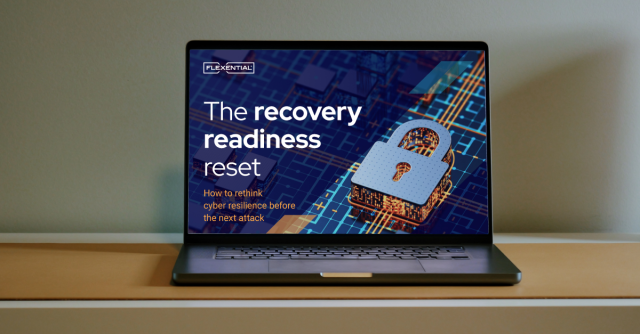
Ready to take a closer look at your recovery strategy? Explore The recovery readiness reset to learn how organizations can move beyond basic DR coverage and build a more resilient, operationally ready recovery program.