

Not all data centers are created equal: Separating myth from reality
Data centers are making headlines. Learn why not all facilities are the same and explore the facts behind common myths about noise, water, power, and more.
Data centers are having a moment.
As artificial intelligence accelerates demand for digital infrastructure, data centers are increasingly part of conversations about power, water, development, and community impact. With that increased attention comes important questions, but also a growing tendency to talk about every data center as though it is the same.
The reality is far more nuanced.
Different data centers serve different purposes
Much of today's conversation is being shaped by the rapid development of massive AI factory and hyperscale campuses. These facilities can require hundreds of megawatts of power and are designed to support enormous computing environments, often for a single technology platform or AI operator.
Enterprise data centers serve a different role.
Rather than supporting a single AI platform, enterprise facilities help power the everyday operations of a diverse mix of organizations, including hospitals, financial institutions, universities, manufacturers, government agencies, and businesses.
That distinction matters.
The size of a facility, the customers it serves, its infrastructure requirements, and the way it operates can all shape its impact on the surrounding community. When every type of data center gets grouped into the same conversation, important differences can get lost.
Data center myths are making headlines
As data centers become more visible, questions naturally follow.
- Are they noisy?
- How much water do they use?
- What happens to the local power grid?
- What does living or working near a data center actually mean for a community?
Those are fair questions. They also deserve answers grounded in how facilities actually operate.
At Flexential, our enterprise data centers are designed to support diverse customer needs while balancing reliability, efficiency, and responsible growth. That means thoughtful decisions around everything from cooling and sound mitigation to utility coordination and long-term infrastructure planning.
And in many cases, the reality looks quite different from the perception.
Consider water use. While water consumption has become a significant part of the broader data center conversation, Flexential air-cooled facilities can operate without using water for cooling.
Or noise. Modern sound attenuation strategies, enclosed equipment, significant setbacks, and limited generator testing can help enterprise data centers operate quietly behind the scenes.
Power is another increasingly important part of the conversation. Responsible growth requires close coordination with utilities, careful capacity planning, and long-term investment in the infrastructure needed to support both businesses and communities.
These distinctions are why context matters.
Looking beyond the facility
The data center conversation also shouldn't stop at what these facilities require. It's important to understand what they enable.
Digital infrastructure works quietly behind thousands of everyday interactions. A patient accessing a medical record. A first responder receiving critical information. A customer completing an online purchase. An employee joining a virtual meeting.
Behind each is infrastructure storing, processing, protecting, and moving information.
Enterprise data centers can also contribute to the communities in which they operate through long-term infrastructure investment, skilled employment opportunities, local tax revenue, and the digital foundation businesses need to grow and innovate.
As digital demand continues to accelerate, reliable infrastructure will only become more important.
A more informed data center conversation
Not every concern about data center growth can or should be dismissed as a myth. Communities have a stake in how infrastructure is developed, and understanding their questions and priorities is an important part of responsible growth.
But having that conversation starts with understanding what is actually being built.
Not all data centers serve the same customers. They don't operate at the same scale. They don't have identical resource requirements. And they don't create the same community footprint.
Not all data centers are created equal.
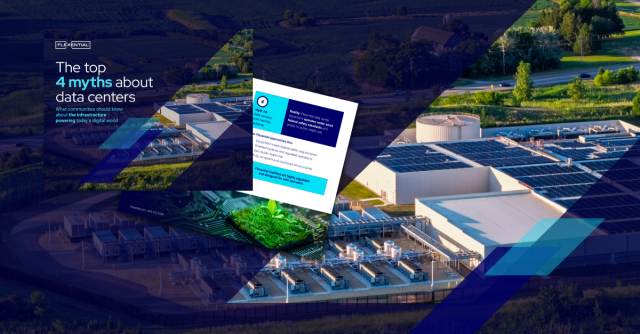
Our new report, The top 4 myths about data centers, takes a closer look at the differences between enterprise data centers and AI factories, the role digital infrastructure plays in everyday life, and the facts behind four of the most common misconceptions surrounding modern data centers.
Ready to separate myth from reality? Download The top 4 myths about data centers to get the full story.